English
 中文简体
Birthday Tablescapes: How to Plan Plates, Napkins and Cups for Any Party
Content
- 1 Three Decisions That Shape the Whole Table
- 2 What Actually Sits on a Birthday Table
- 3 Match the Component to the Food, Not Just the Theme
- 4 Theme Direction by Age Group
- 5 Foil, Embossing and Print: Which Finishes Survive Real Use
- 6 Sizing, Tolerances and the Details Buyers Regret
- 7 How Many Pieces You Actually Need
- 8 Custom Printing, Certifications and Lead Times
A thirtieth birthday dinner for twenty-four guests looks like a seating problem. It is really a tabletop problem: how many plates leave the kitchen at once, whether a paper napkin survives a slice of chocolate cake, and whether the cups still feel firm at ten at night when someone finally pours the coffee.
The answer first: a birthday tablescape works when the plates, napkins and cups are chosen in a fixed order, and everything else follows. Plates come first because they carry the food. Napkins come second because they set the colour. Cups come last because they are the most technically constrained item on the table. Theme, balloons and letterboards arrive after those three decisions, not before them.
Three Decisions That Shape the Whole Table
Most tablescape problems trace back to a choice made in the wrong order. Work through these three in sequence and the colour palette becomes easy.
- Count the guests who will actually sit down, not the invitations sent. Include the children who will eat at the table rather than on the floor.
- Decide how the food arrives: plated and served, passed on trays, or laid out as a buffet. That one answer sets plate size, plate count and how much rim the plate needs.
- Only then choose the theme and colour direction, because the theme has to fit the tableware the menu requires, not the other way round.
A buffet plate used for a plated dessert course looks oversized and clumsy. A pastel cup that matches a nursery colour scheme is the wrong vessel for mulled wine. Sequence matters more than taste.
What Actually Sits on a Birthday Table
Strip the styling away and a birthday table is three working zones. Each has a different failure mode, and each is specified differently when you order.
The plate zone
The plate zone carries the most weight and the most grease. A sit-down dinner needs a main plate plus a smaller second plate for cake; a buffet needs one plate per pass. Round plates are the default because cutlery sits naturally on them. Square plates read as more modern and hold slightly more food for the same rim length, but the corners must stay flat when the plate is loaded on one side. Flower, wave and heart shapes belong on a dessert or display table, where they are seen more than used.
The napkin zone
Napkins do more decorative work than any other paper item, and they are the easiest place to change the mood. A flat-printed napkin at two or three ply handles cake and buttercream; an embossed napkin adds texture without adding colour; a foil-stamped napkin reads as formal. Shaped formats, cut into a heart, a tree or a scalloped edge, lift a plain setting, which is why shaped paper napkins are usually the first upgrade on an adult birthday table.
 Lace-edged NapkinThese lace-trimmed tissues use soft, high-grammage virgin pulp as the base material, employing food-grade environmentally friendly inks for high-definition printing. C...View Product →
One practical note: a napkin folded twice and standing in a glass needs a firmer sheet than one laid flat under a fork. If the design relies on standing folds, have the ply and the fold tested before approving the artwork.
The drink zone
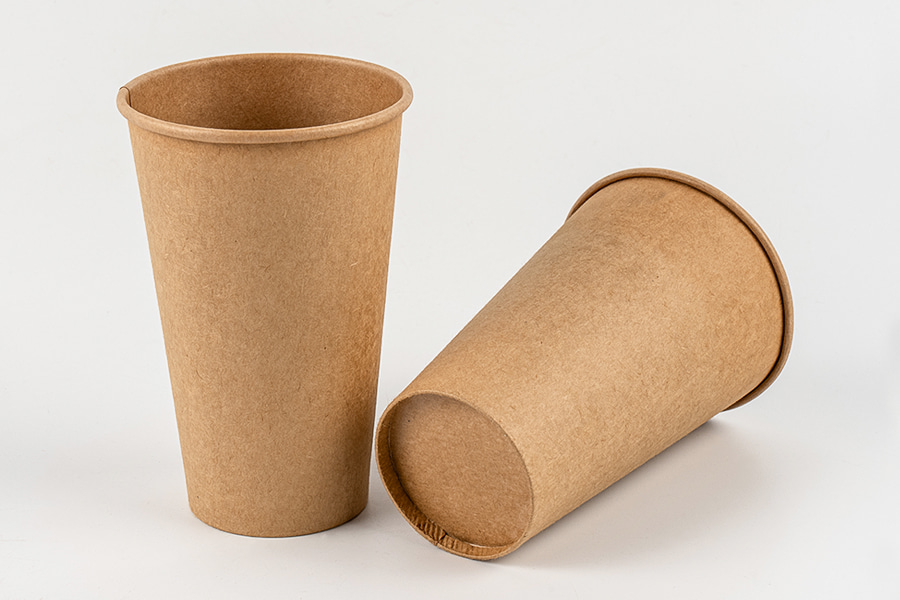
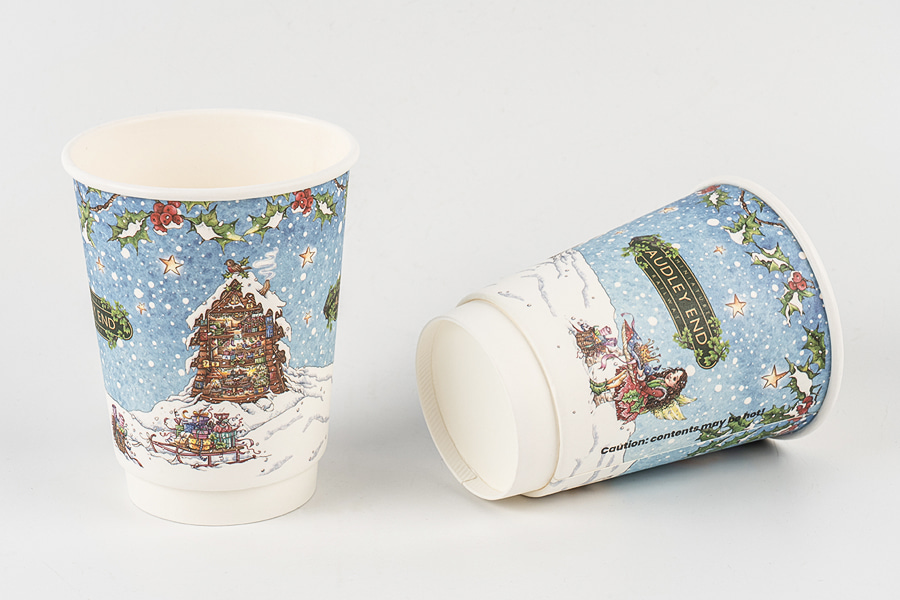
Cups are where birthday tables go wrong quietly. Cold and hot drinks pull paper in opposite directions. A cold drink condenses on the outside and softens the wall; a hot drink pushes heat through it and stresses the seam. A double-layer cup solves hand comfort for coffee and tea, a single-layer cup is fine for juice and sparkling drinks served within an hour or two, and an ice cream cup is rimmed and sized for frozen service rather than liquid.
Match the Component to the Food, Not Just the Theme
Components do not have to match in style, but they do have to match the food they touch. This is the checklist worth running when a menu is described before a theme is chosen.
| Component | Best for | What it must handle | Check before ordering |
|---|---|---|---|
| Round paper plate | Plated main course and cake | Loaded slice weight, cutlery pressure | Rim height and base flatness |
| Square paper plate | Buffet lines, larger portions | Food pushed into the corners | Corner rigidity |
| Shaped plate (flower, wave) | Dessert and display tables | Light food, heavy photography | Stacking height for storage |
| Double-layer cup | Coffee, tea, hot drinks | Heat through the wall, seam stress | Layer bonding and inner coating |
| Single-layer cup | Juice, lemonade, soft drinks | Condensation over two hours | Whether a sleeve is needed |
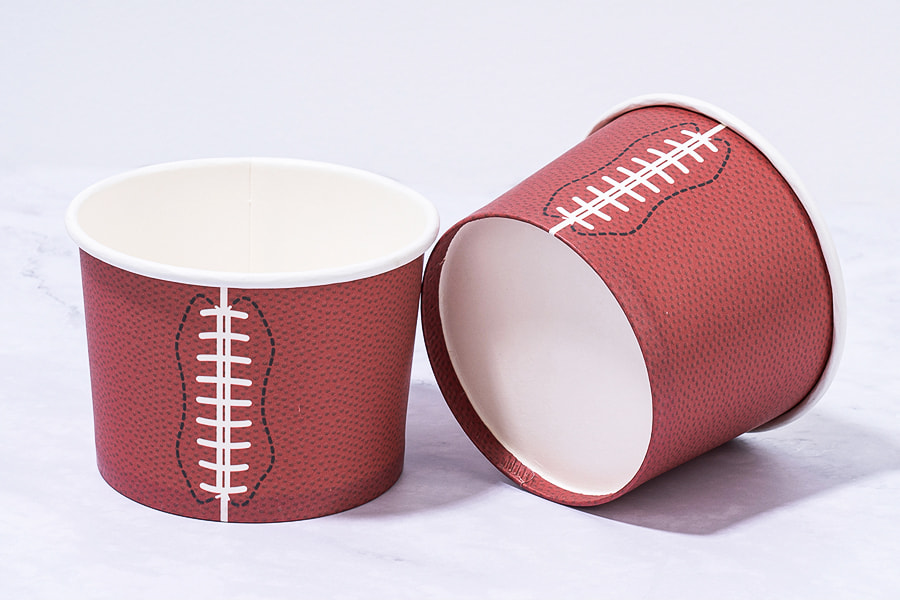
| Ice cream cup | Frozen dessert service | Cold and slight base moisture | Rim diameter against scoop size |
| Embossed napkin | Everyday table service | Grease from cake and food | Ply count and embossing depth |
| Foil-stamped napkin | Milestone and formal birthdays | Foil flaking on creases | Crease test after folding |
| Lace-edged napkin | Elegant adult birthdays | Folding and standing in a glass | Edge tearing when unfolded |
If matching three components from three suppliers sounds like more work than it is worth, ordering them as one complete catering paper set keeps the print, the colours and the board consistent, and usually removes a second shipping cost.
Theme Direction by Age Group
Once the working zones are settled, the theme becomes a colour and pattern decision, and it shifts with the age of the guest of honour.
Young children, roughly one to six
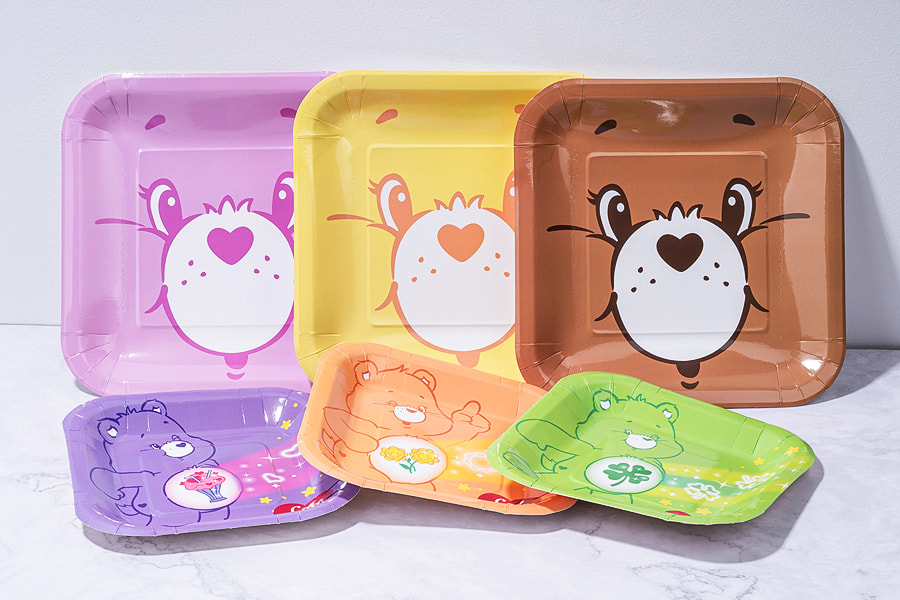
Bright saturated colours, large cartoon motifs and simple shapes work best, because the table is photographed from a low angle and the plates will be dropped. A coordinated set beats individual pieces: cup, plate and napkin come from one print run, so the colours match exactly.
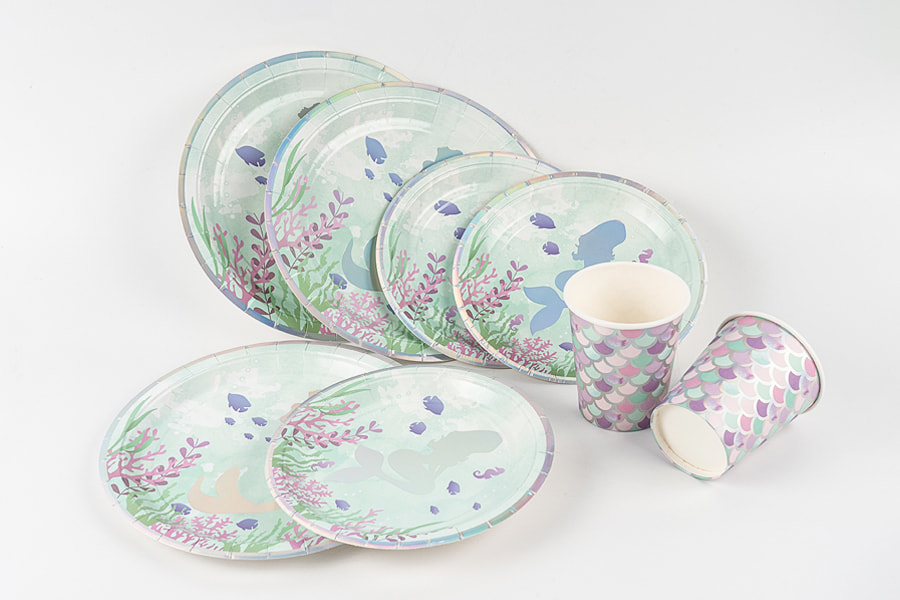 Childlike Fantasy Themed SetsChildlike Fantasy Themed Sets are a one-stop disposable tableware set designed for various occasions such as children's birthdays, family gatherings, and outdoor picni...View Product →
Tweens and teenagers
Cartoons read as babyish and pastels read as an adult party. Solid colour plates with one accent, colour-blocked cups and plain or lightly embossed napkins usually suit this age best. Metallic foil works here in small quantities, on a plate rim rather than across a whole design.
Milestone adult birthdays
Cream, black, deep green and gold. Matte printed plates with a narrow foil rim, foil-stamped napkins and plain cups. When guests dress up, the tableware should not look like a picnic.
Foil, Embossing and Print: Which Finishes Survive Real Use
Three finishes appear on almost every decorated birthday range, and they behave differently once food arrives.
- Hot-stamp foil transfers a metallic layer under heat and pressure. It looks the most formal and is the finish most likely to flake if the sheet is folded sharply after stamping, so ask for a fold test on the finished piece rather than on a flat sheet.
- Embossing presses a raised pattern into the paper. Nothing is added, so nothing peels, and the texture shows in photographs even on a plain white plate.
- CMYK print is the most flexible and least expensive way to add a pattern, and the only finish that reproduces a photograph or a logo accurately.
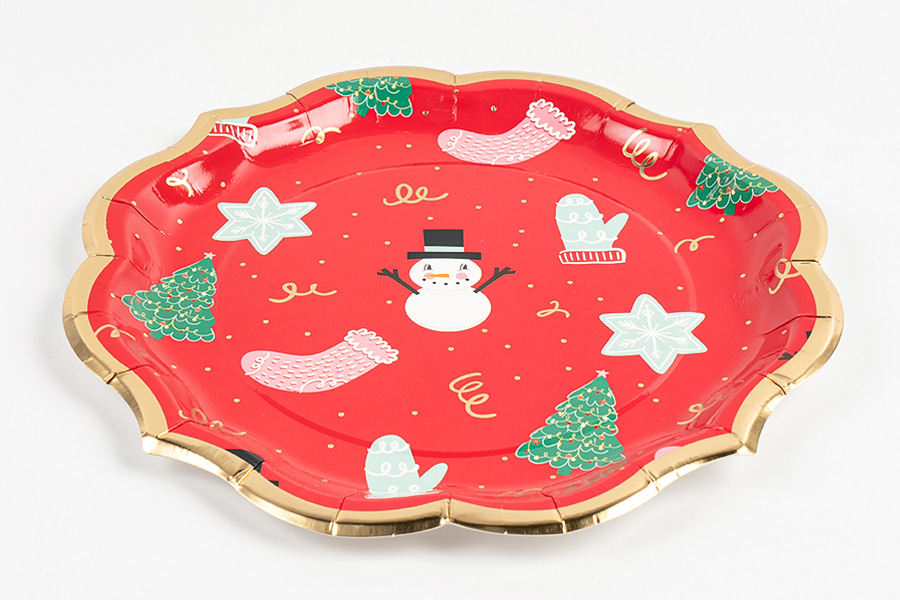
For an elegant adult birthday, gold foil on a round plate plus embossed napkins covers the whole table with two finishes instead of five, and the result looks deliberate rather than busy. Where plates will be stacked and handled a lot, keep foil away from the outer rim, because that is where chipping starts.
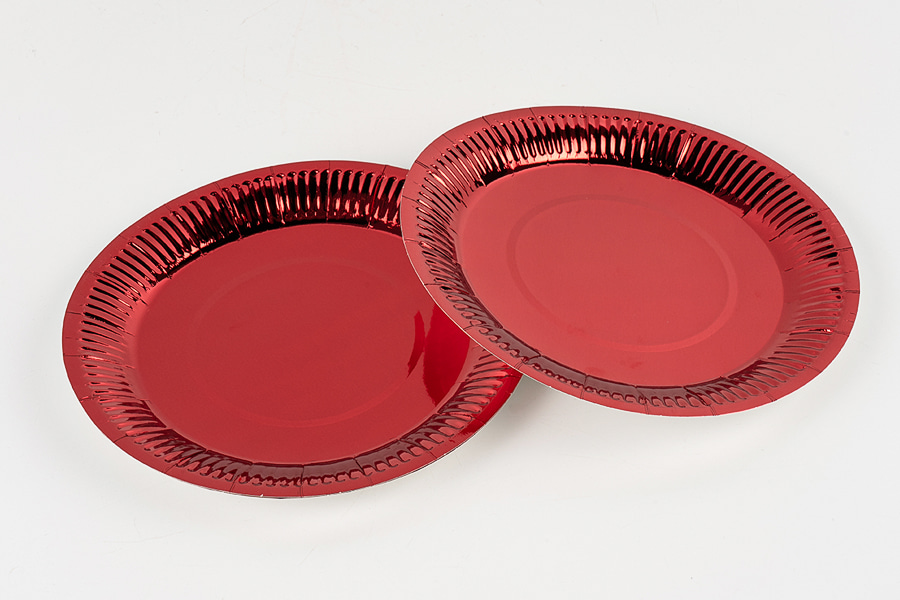 Gold-stamped Round Paper PlatesThe hot-stamped round paper plate is a high-end premium disposable tableware, featuring a classic round arc design that combines aesthetics and practicality. The exqui...View Product →
Sizing, Tolerances and the Details Buyers Regret
Most complaints on a birthday tableware order are not about design. They are about five measurable details.
- Diameter measured where? A plate can be measured across the rim or across the base, and the two numbers differ enough to change how it sits on a charger.
- Registration drift. On printed plates the pattern should sit a few millimetres inside the rim; if it runs to the edge, normal die-cutting tolerance shows up as a white sliver.
- Foil adhesion after folding. Napkins are folded before packing, so foil is stressed along the crease. Specify the crease test in writing.
- Colour drift between batches. Keep an approved colour reference on file, because a reorder six months later runs on a different press run.
- Storage. Paper absorbs moisture, and cartons kept in a damp stockroom lose stiffness before they ever reach a table.
How Many Pieces You Actually Need
Quantity planning is simple arithmetic once the serving style is fixed. These rules of thumb cover most birthday tables.
- Plates: 1.3 per seated guest when a main course and cake are both served; 1.8 per guest for a buffet.
- Napkins: 2 per guest for a meal, since one usually ends up under a glass or on a lap.
- Cups: 1.5 per guest if both a cold drink and coffee are poured; 1 per guest for a drinks-only party.
- Ice cream cups: 1 per guest plus two spares, because children ask for a second scoop.
- Add a 10 to 15 percent buffer across the order for drops, second helpings and the plate that ends up carrying presents.
Thirty guests at a plated dinner with cake therefore comes to roughly 40 plates, 45 cups, 30 ice cream cups and 60 napkins. That is a small pallet rather than a warehouse, which is exactly the order size where a made-to-order print still makes economic sense.
Custom Printing, Certifications and Lead Times
Birthday themes are personal, so most buyers want something that is not in a catalogue. Custom work on paper tableware is narrower than it looks: it is a print, die-cutting and forming exercise rather than a new material. Custom pattern printing uses the same CMYK process as any commercial print job, applied to food-contact board. Custom shapes come from a die: a heart, a scalloped circle, a wave-edged plate or a napkin cut into a holiday silhouette. Embossing and hot-stamping are added on separate units after printing. If you can describe the theme in one sentence and supply vector artwork, feasibility is usually confirmed from a single sample.
Food contact is the part buyers should verify rather than assume. Ask for the current SGS report, the FDA status of the board and coating, and the EU standard the product is tested against, then check that the certificate names the actual factory and material. A certificate that names only a trading company will not help at customs.
Lead time splits into three parts: sample approval, plate and die preparation, then production and packing. Artwork changes after plates are made are the most common cause of a missed delivery date on a themed order, so freeze the design before tooling starts. Our own production runs on Heidelberg CMYK presses, die-cutting and corrugating equipment and dozens of cup and plate forming machines in a 9,000 square metre plant, with a daily capacity above one million cups and plates and a workforce where more than 70 percent have stayed with the company for over ten years. None of that changes the sequence: sample first, tool second, produce third.
A birthday tablescape is judged in about four seconds and then used for two hours. Leading with the plates, napkins and cups that suit the food and the guest count gives a table that looks styled in photographs and still holds up when the cake is cut.
The next step is small: pick one theme direction, request samples of the plate, napkin and cup in that direction, and test them with the actual food and drink on the menu. A birthday only happens once.