English
 中文简体
Decorating Plates: Styles, Materials, and a B2B Buying Guide for Event Pros
Content
- 1 Start With the Job: Wall Decor or Table Service?
- 2 Paper Plate Anatomy: What Actually Affects Decorating Results?
- 3 Shape and Edge Options for Decorating Plates
- 4 Surface Finishes: Print, Emboss, and Hot Stamping
- 5 Theme Planning for Holidays and Everyday Service
- 6 Customization Tolerances and Sampling
- 7 Quality, Food Safety, and Compliance Checks
- 8 Packaging, Storage, and Shipping Risks
- 9 Cost Drivers and Buying Checklist
If you are decorating plates for a retail display, a catering order, or a child’s birthday table, the first decision is not color or pattern. It is the plate’s job. A wall-hung antique porcelain plate and a disposable paper plate used under hot pasta have different failure points. For B2B buyers, the practical question is whether the decorated plate will hold food safely, survive transport, and match the theme at the agreed unit cost. That is why decorating plates should be specified by material, shape, coating, print method, and packing, not by a single picture.
This guide uses paper plates as the working example because they are the most common decorated plate in parties, restaurants, and seasonal catering. If your project involves ceramic wall decor, the same logic applies in a different order: hanging hardware, weight, and rim strength matter more than food-contact rules. For disposable tableware, food safety and stackability come first. Our decorative paper plates range includes round, square, and irregular shapes, so the choice starts with service style.
Start With the Job: Wall Decor or Table Service?
Decorating plates is an ambiguous phrase. It can mean arranging vintage porcelain on a dining room wall, painting a ceramic plate for a gift, or choosing printed paper plates for a party. The end use changes the specification. A wall plate may need a plate hanger, felt backing, and a rim that will not chip. A table-service paper plate needs a food-safe coating, a stable rim, and a print that will not flake onto food.
For professional buyers, write the job in one sentence before asking for samples: “We need a 9-inch round plate with a Christmas print for a catering chain, packed 50 per sleeve, shipped in humid conditions.” That sentence identifies size, shape, theme, packing, and climate risk. Without it, a supplier may quote a lower-grade board or a thinner coating that looks acceptable in a photo but fails in use.
Paper Plate Anatomy: What Actually Affects Decorating Results?
Most decorating problems begin below the artwork. The base board, coating, rim, and cutting die decide whether the plate feels rigid and whether the print stays clean. The table below shows the specification points that matter most when comparing decorated paper plates.
| Specification | Typical Choice | Decoration Impact | Procurement Risk |
|---|---|---|---|
| Base board weight | 180–300 gsm food-grade board | Heavier board improves rigidity and print opacity | Light board flexes under hot food and can crack at the rim |
| Coating | Clay-coated, PE, or compostable dispersion | Controls grease resistance and ink adhesion | Wrong coating may migrate or smear; compostable claims need proof |
| Rim design | Flat, rolled, or embossed | Rolled rims add strength; embossing adds texture | Weak rims reduce stack stability and cause spills |
| Print method | CMYK offset or flexographic | Offset gives fine detail; flexo suits simple repeats | Color drift between batches; registration off-center |
| Surface finish | Matte, gloss, embossed, hot stamped | Adds perceived value for holidays and weddings | Hot stamping can scratch if packing rubs |
| Shape tolerance | Typically ±1–2 mm on die-cut edges | Tight tolerance keeps patterns centered | Loose tolerance causes uneven stacks and packing waste |
For decorating plates, stiffness and coating are often more important than the pattern itself. A buyer who compares only artwork may miss the two variables that drive complaints: rim collapse and print rub-off.
Shape and Edge Options for Decorating Plates
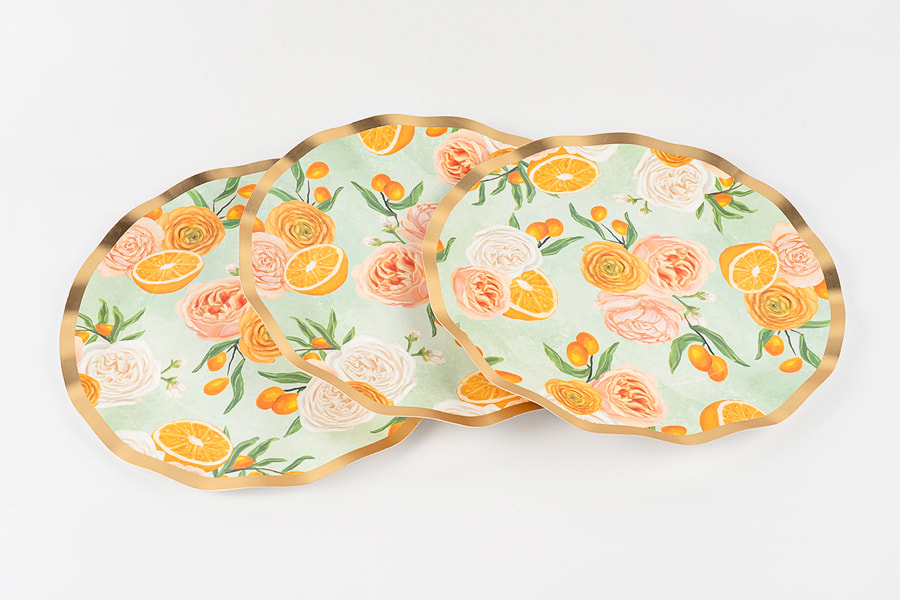
Round plates are the default for pasta, cake, and barbecue because they stack efficiently and reduce material waste. Square plates offer more central print area, which helps when decorating plates with logos, characters, or border patterns. Irregular shapes, including flower, wave, scalloped, and custom die-cut, turn the plate into part of the table decor, but they also add tooling and packing cost.
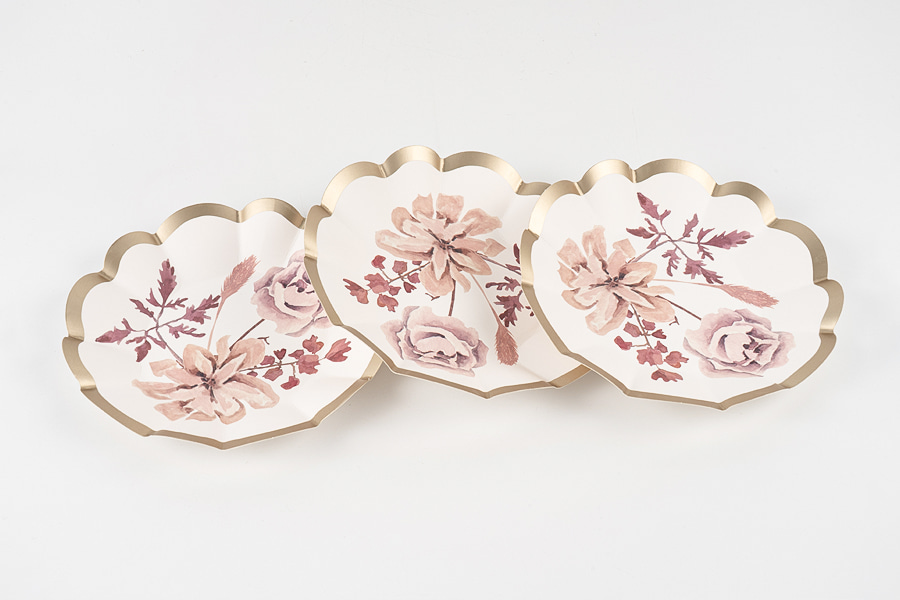 Flower-Shaped Disposable Paper Plates for Themed PartiesFlower-shaped disposable plates with realistic petal textures, high-grammage unbleached virgin pulp, oil and water resistance, multiple sizes, and OEM options suit themed events.View Product →
Edge choice affects handling. A rolled rim adds stiffness and gives guests a place to grip. A flat rim can look modern but may bend when loaded. For children’s parties, avoid sharp corners on square or custom shapes; a rounded corner or flower edge is safer and photographs better.
Surface Finishes: Print, Emboss, and Hot Stamping
Print is the first finish most buyers consider, but embossing and hot stamping change the hand feel. CMYK offset printing can reproduce multi-color artwork and soft gradients. Flexographic printing is cost-effective for one- or two-color repeats. Embossing raises a design without ink, which works well for plates that need a subtle texture. Hot stamping adds metallic gold or silver and is common for weddings, anniversaries, and holiday catering.
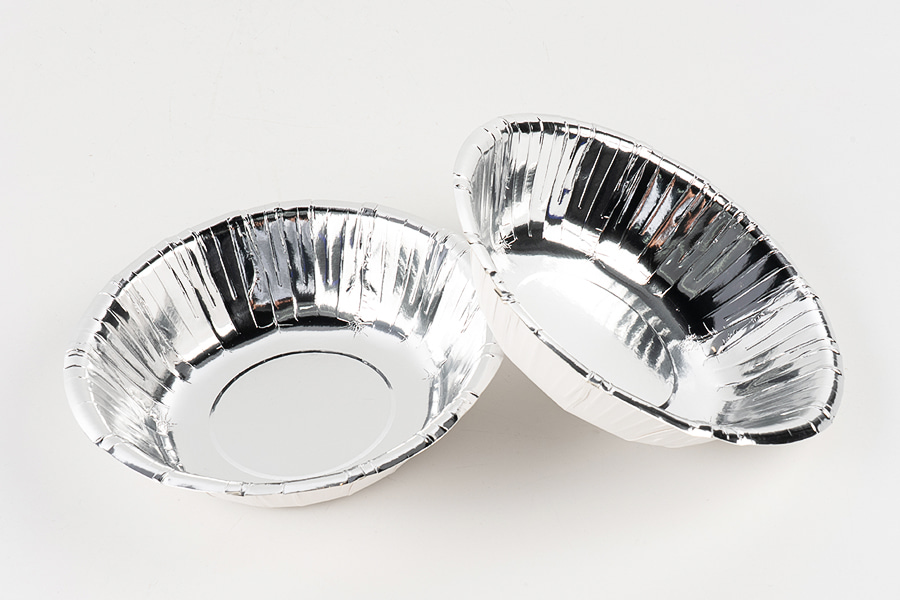
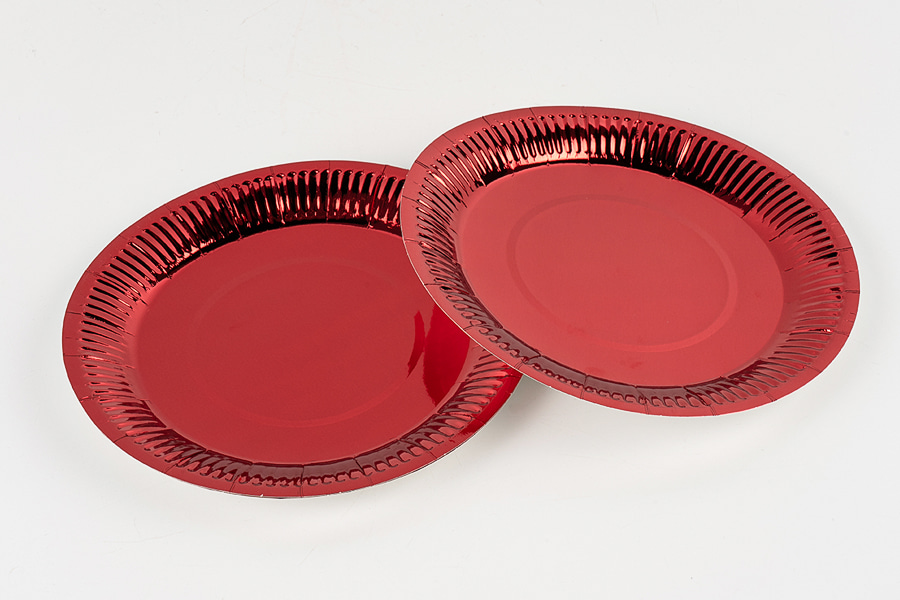 Gold-Stamped Round Paper Plates for Weddings and CateringPremium round disposable plates with gold hot stamping, food-grade virgin pulp, leak-proof construction, and custom logo options for weddings and banquets.View Product →
Food-contact safety must be confirmed for every finish. Inks and foils should be suitable for indirect or direct food contact, depending on the plate area and local rules. Do not assume that a decorative foil is food-safe just because it is on a paper plate. Ask for migration test reports and a written declaration for the exact material combination.
Theme Planning for Holidays and Everyday Service
Holiday themes sell in narrow windows. Christmas, Easter, Halloween, and Valentine’s Day require artwork approval months before the season, and late changes can miss the shipping window. A Christmas catering set may include plates, napkins, and cups that share a palette, so print registration across items becomes a quality issue, not only a design issue.
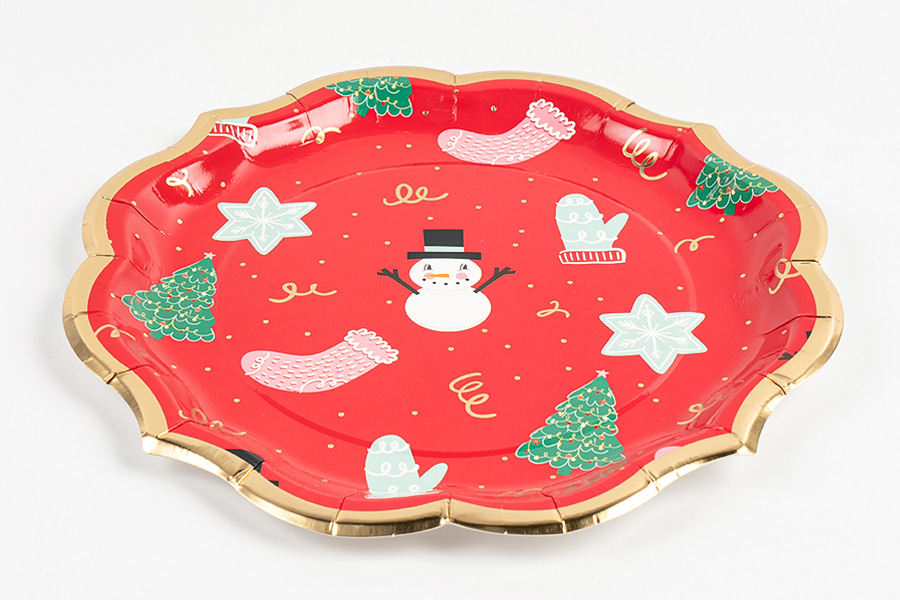
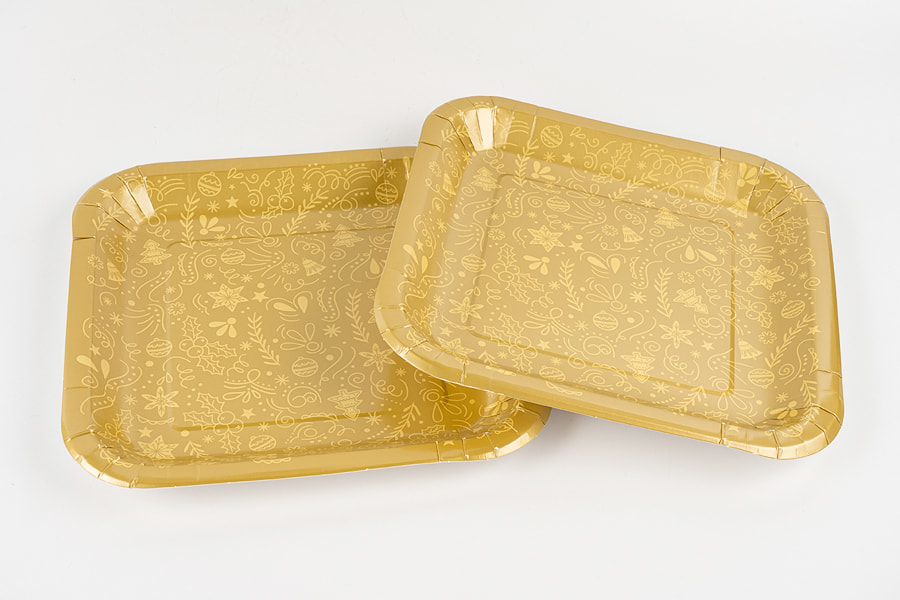 Christmas-Themed Square Decorative Paper Plates for Holiday CateringSquare Christmas paper plates with snowmen, trees, reindeer, and gingerbread designs, food-grade ink, virgin pulp, microwave suitability, and OEM/ODM options for holiday service.View Product →
Everyday themes need longer shelf life. Childlike fantasy, elegant, fruit, natural, and limited-time holiday sets can serve restaurants, hotels, and party retailers outside a single festival. When decorating plates for these programs, choose a base shape that can carry multiple prints. That reduces tooling changes and keeps unit cost stable across the year.
Customization Tolerances and Sampling
Custom decorating plates usually move through five steps: brief, dieline, sample, approval, and production. The dieline defines the flat shape before forming; if the artwork crosses the rim, the visible result changes after the plate is pressed. Always review a formed sample, not only a flat print proof.
- Confirm food-contact requirements, plate size, and board weight.
- Agree the dieline and safe print area, including rim wrap.
- Approve color against a physical sample under controlled light.
- Test stack height, rim strength, and grease resistance.
- Lock packing, carton marks, and inspection criteria before mass production.
Color tolerance should be written into the approval. A practical target for solid brand colors is a Delta E of 2 to 3, but metallic and embossed finishes need visual approval because they change with light. Sampling time depends on whether a new die is needed; a new shape can add several weeks before production.
Quality, Food Safety, and Compliance Checks
Paper plates that touch food are regulated differently from wall decor. Buyers should ask for FDA, EU, or equivalent test reports and confirm that the report covers the exact board, coating, ink, and foil used in the order. Our paper plate manufacturing process includes checks for thickness, stiffness, and seal integrity, but every buyer should still verify batch records and retain samples.
- Board thickness and grammage: measure at several points across the plate.
- Rim strength: load the plate with the intended food weight and check bending.
- Grease and moisture resistance: test with hot, oily, or wet foods.
- Print adhesion: use tape or rub tests after conditioning at high humidity.
- Migration and food-contact compliance: match reports to the actual materials.
For decorating plates used in direct food service, keep decoration away from the central food zone where possible. A printed border, embossed rim, or hot-stamped outer edge reduces the risk of ink or foil contacting food.
Packaging, Storage, and Shipping Risks
Decorated paper plates are fragile in ways that a photo cannot show. Humidity softens board, pressure warps rims, and vibration rubs printed surfaces. Sleeves, shrink wrap, and carton compression all affect arrival quality. If the destination is tropical or the container passes through humid ports, specify moisture-barrier packing and a desiccant where appropriate.
Stack height matters for freight and for restaurant storage. A plate that is too thin may allow higher stacks but can collapse under load. A heavier plate costs more per unit but may reduce breakage and returns. Run a simple drop and compression test with the final carton before committing to a full container.
Cost Drivers and Buying Checklist
The unit price of decorating plates is driven by board weight, coating, print colors, finishing, shape, packing, and order quantity. A flower-shaped plate with hot stamping and a custom carton will cost more than a round plate with one-color print, even if the artwork looks equally simple. The cheapest sample is rarely the lowest total cost if it fails in storage or food service.
- Define the event, food type, and expected holding time.
- Choose round, square, or irregular shape based on table setting and packing.
- Match coating to grease, moisture, and food-contact rules.
- Approve a formed sample, not just a digital proof.
- Confirm MOQ, tooling cost, lead time, and carton configuration.
- Request test reports for board, ink, and finish.
Decorating plates works best when the decoration follows the function. For wall decor, focus on hanging safety and visual balance. For table service, focus on food safety, rim strength, coating, and batch consistency. A decorated paper plate is a packaging and serving product, not only a printed surface.
Before placing a large order, request samples in the final shape, finish, and packing. Test them with the food and climate they will meet. That single step prevents most of the surprises that show up after the container arrives.