English
 中文简体
中文简体Can disposable restaurant paper product sets effectively reduce cleaning costs?
Content
- 1 What Restaurant Disposable Paper Product Sets Typically Include
- 2 Where Disposable Paper Sets Directly Cut Cleaning Costs
- 3 Annual Cost Comparison: Reusable Tableware vs. Disposable Paper Sets
- 4 Which Restaurant Types Benefit Most from Disposable Paper Sets
- 5 Eco-Friendly and Compostable Options: Balancing Cost and Sustainability
- 6 How to Source and Purchase Disposable Paper Sets Cost-Effectively
- 7 When Disposable Paper Sets May Not Be the Right Choice
- 8 Frequently Asked Questions About Restaurant Disposable Paper Product Sets
- 8.1 Q1: How much can a typical fast-casual restaurant save annually by switching to disposable paper product sets?
- 8.2 Q2: Are there paper plate and cup options durable enough for hot foods and soups?
- 8.3 Q3: Can disposable paper product sets be customized with a restaurant's branding?
- 8.4 Q4: What is the difference between compostable and biodegradable paper products for restaurants?
- 8.5 Q5: How should restaurants store disposable paper product sets to maintain quality?
- 8.6 Q6: Are there any health or food safety regulations affecting disposable paper product use in restaurants?
Yes — restaurant disposable paper product sets can meaningfully reduce cleaning costs, often cutting dishwashing labor and supply expenses by 30–60% depending on establishment type and volume. For fast-casual restaurants, food trucks, catering operations, and high-turnover dining venues, switching to bundled disposable paper sets eliminates the labor-intensive cycle of washing, sanitizing, drying, and restocking reusable tableware. When procurement is optimized through bulk purchasing, the per-unit cost becomes competitive enough to justify the switch on financial grounds alone — before factoring in water, energy, and labor savings.
This article breaks down exactly where and how restaurant disposable paper product sets generate operational savings, what the numbers look like across different restaurant formats, and how to evaluate whether they make sense for your specific business model.
What Restaurant Disposable Paper Product Sets Typically Include
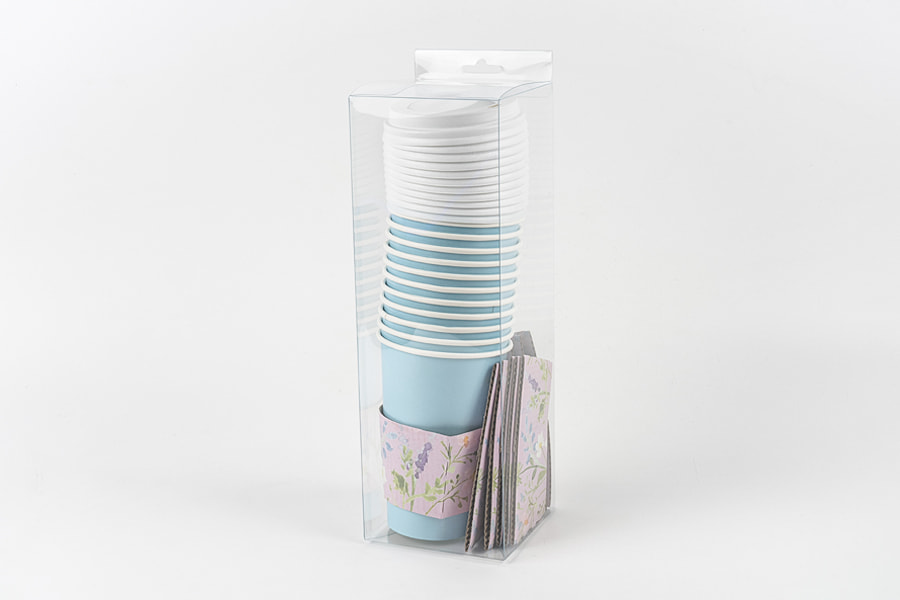
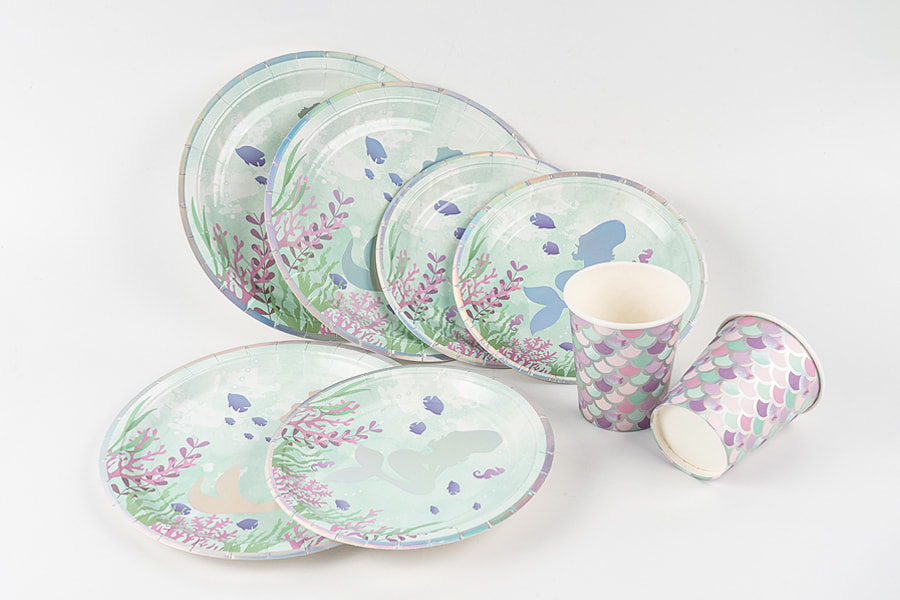
A complete disposable paper product set for restaurant use generally combines several items sold or purchased together as a coordinated bundle. Understanding what's included helps operators calculate true per-cover costs and identify substitution opportunities.
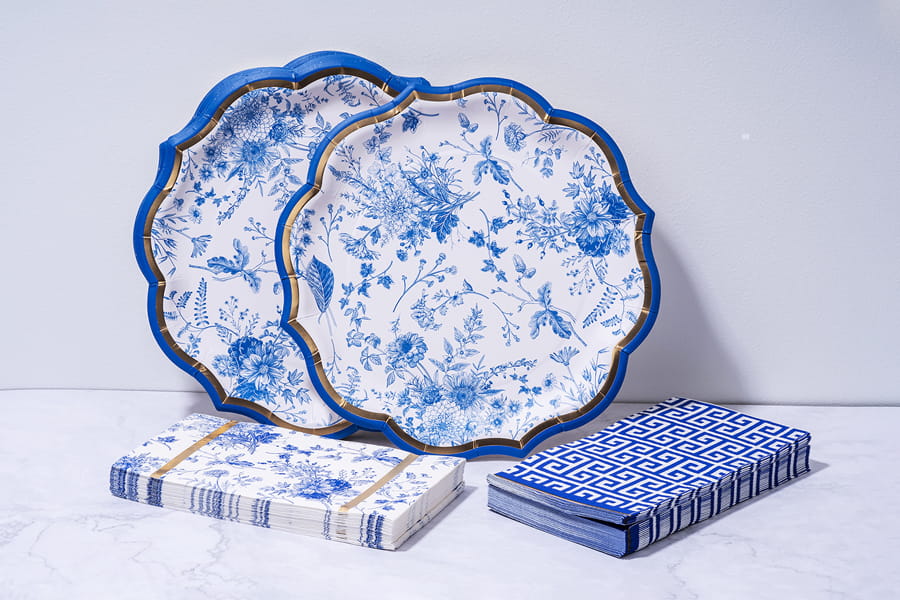
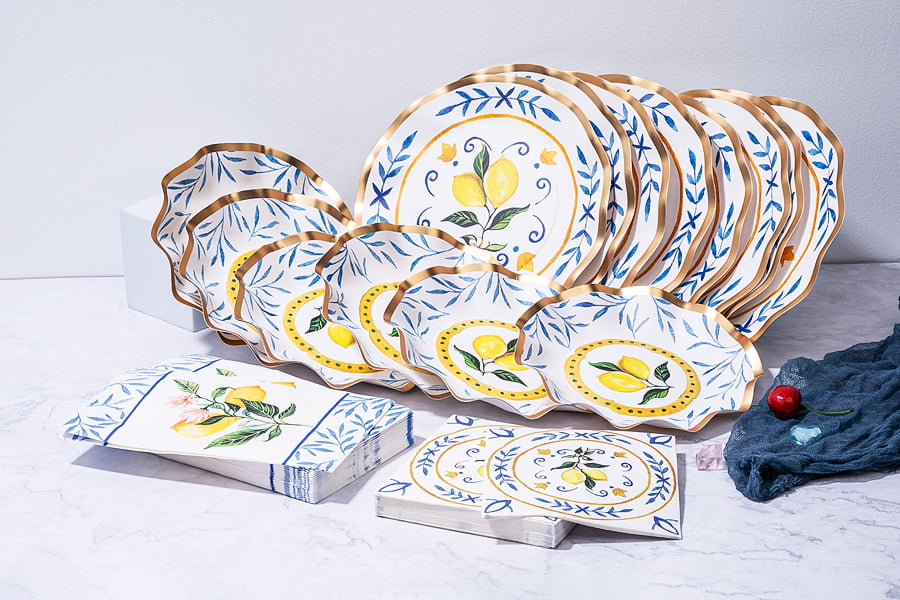
- Kraft or bleached paper plates — available in 6", 9", and 10" diameters; grease-resistant coatings for hot food applications
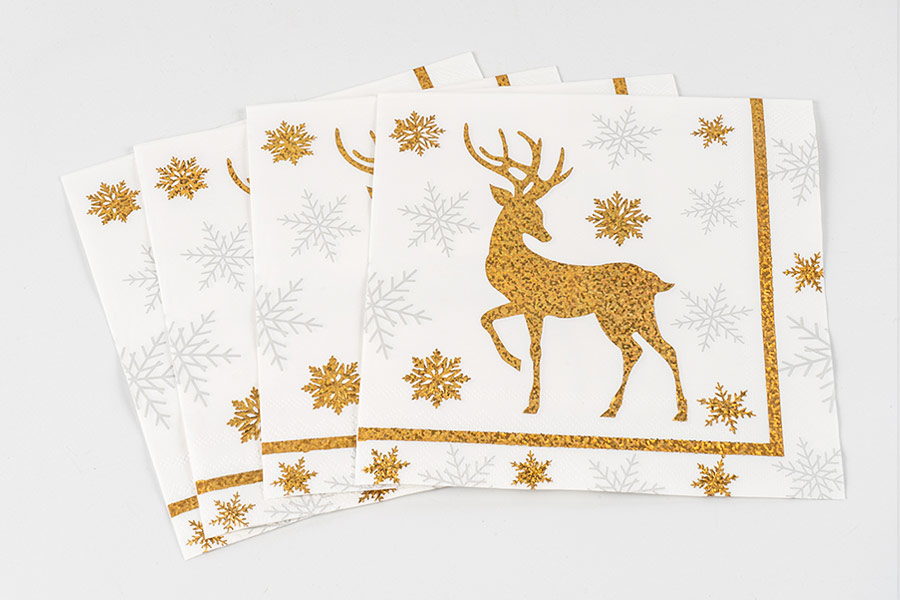
- Paper napkins — 1-ply to 3-ply; luncheon (12"×12") or dinner size (17"×17"); often included as 2–4 per cover
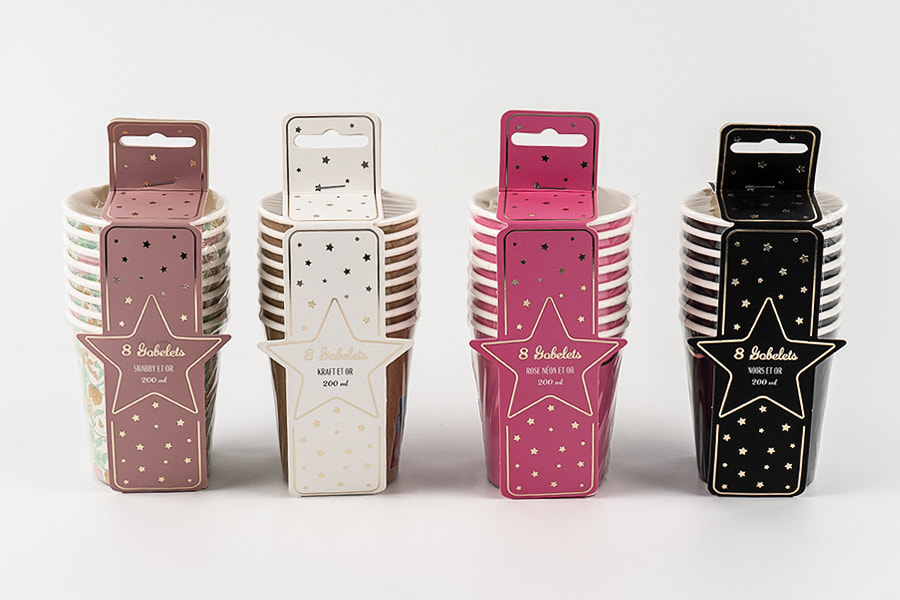
- Paper cups and lids — hot and cold variants; wax-lined or PLA-coated for liquid resistance
- Paper food trays and boats — for fries, sandwiches, or appetizer portions
- Kraft paper placemats — table lining that also serves a branding function
- Paper straws and wrapped cutlery sets — sometimes bundled as a utensil roll or pouch
Bundled sets purchased from wholesale distributors typically cost between $0.08 and $0.35 per cover, depending on quality tier and order volume. Premium eco-certified sets with compostable materials run higher, while standard kraft sets in bulk (cases of 500–1,000) are at the lower end.
Where Disposable Paper Sets Directly Cut Cleaning Costs
The cost savings from disposable paper sets are not limited to skipping the dishwasher. They cascade across multiple operational categories that restaurants often undercount.
Dishwashing Labor Elimination
In a mid-size restaurant serving 150–200 covers per day, a dedicated dishwasher working a 6-hour shift at $14–$16/hour represents $84–$96 in daily labor cost, or roughly $25,000–$35,000 annually including employer payroll taxes and benefits. Shifting to disposable paper products eliminates or significantly reduces this role, with bussing responsibilities distributed to floor staff at minimal incremental cost.
Water and Energy Cost Reduction
Commercial dishwashers consume between 0.5 and 1.5 gallons per rack (high-temperature conveyor models) and require water heated to 150–180°F. For a restaurant running 40–80 racks per day, this translates to approximately $1,800–$4,200 per year in water and energy costs, based on average U.S. commercial utility rates. Eliminating dishwashing removes this expense category entirely.
Chemical and Equipment Maintenance Savings
Commercial dishwashing detergent, rinse aid, and descaler programs cost restaurants between $150 and $400 per month depending on volume. Equipment maintenance contracts for commercial dishwashers average $600–$1,500 per year, plus unexpected repair costs. Disposable paper sets eliminate both expense lines.
Breakage and Replacement Cost Removal
The foodservice industry standard estimates 20–25% annual replacement rates for ceramic plates, glassware, and flatware due to breakage, loss, and theft. For a 50-seat restaurant with a full reusable set, this can mean $1,500–$4,000 in annual tableware replacement. Paper disposables carry zero breakage cost.
Annual Cost Comparison: Reusable Tableware vs. Disposable Paper Sets
| Cost Category | Reusable Tableware (Annual) | Disposable Paper Sets (Annual) |
|---|---|---|
| Dishwashing Labor | $25,000–$35,000 | $0 |
| Water & Energy | $1,800–$4,200 | $0 |
| Chemicals & Maintenance | $2,400–$6,300 | $0 |
| Tableware Replacement | $1,500–$4,000 | $0 |
| Paper Product Supply Cost | $0 | $4,000–$12,000 |
| Estimated Total | $30,700–$49,500 | $4,000–$12,000 |
Which Restaurant Types Benefit Most from Disposable Paper Sets
Not every restaurant benefits equally. The return on switching to disposable paper product sets is highest in formats where turnover speed, throughput volume, and labor cost pressure are greatest.
- Fast-casual and counter-service restaurants: High daily cover counts (200–500+) make per-unit paper costs low while eliminating full-time dishwasher roles. Brands like Shake Shack and Chipotle have standardized paper tray liners and paper cups as core operational tools.
- Food trucks and pop-up vendors: No access to commercial dishwashing infrastructure makes disposable paper sets the only practical option. Proper paper sets also improve presentation and brand perception vs. generic foam alternatives.
- Catering and event dining: Off-site events cannot rely on a fixed dishwashing station. Premium disposable paper sets with linen-textured napkins and rigid-feel plates are widely used in wedding and corporate catering — reducing post-event cleanup time by 50–80%.
- Ghost kitchens and delivery-only operations: All packaging is already disposable; coordinated paper product sets improve order presentation and reduce packaging cost per order through bundled purchasing.
- Institutional foodservice (hospitals, schools, cafeterias): High-volume, fixed meal periods make dishwashing a logistical bottleneck; paper sets enable faster turnover and reduce cross-contamination risk in healthcare settings.
Eco-Friendly and Compostable Options: Balancing Cost and Sustainability
A common concern with disposable paper sets is environmental impact. However, the market has shifted substantially toward compostable and recycled-content products, often at a cost premium of only 10–25% over conventional paper sets.
Compostable Certification Standards to Look For
- BPI Certified Compostable (Biodegradable Products Institute) — North American industrial composting standard
- EN 13432 — EU standard for compostable packaging materials
- Paper — ensures responsible forest sourcing for all paper components
- PFAS-free coatings — increasingly required by state regulations (California AB 1200, effective 2023) for food-contact paper products
Restaurants in municipalities with commercial composting infrastructure can divert paper waste from landfill entirely, making compostable disposable sets a net positive sustainability choice compared to the water and chemical footprint of dishwashing cycles. Studies from the University of Michigan found that dishwashing a ceramic plate consumes approximately 5× more energy per use than manufacturing and disposing of a comparable paper plate when full lifecycle impacts are considered in water-scarce regions.
How to Source and Purchase Disposable Paper Sets Cost-Effectively
Procurement strategy significantly affects whether disposable paper product sets deliver the projected cost savings. Retail-price purchasing erodes the cost advantage quickly.
Recommended Sourcing Strategies
- Buy in case quantities from restaurant supply wholesalers (Sysco, US Foods, Gordon Food Service) — case pricing is typically 40–60% lower than retail unit pricing.
- Join a group purchasing organization (GPO) — restaurant associations and franchises can access negotiated pricing unavailable to independent operators.
- Source bundled sets from specialty paper product manufacturers (Hoffmaster, GP PRO, Dart Container) — pre-bundled cover sets reduce per-unit cost and simplify inventory management.
- Negotiate annual volume contracts — committing to 12-month volume forecasts unlocks tiered pricing from most distributors, often saving an additional 8–15%.
- Consider private-label or custom-printed sets — at volumes above 10,000 units, custom branding on kraft paper products costs only marginally more than plain stock and adds marketing value.
| Purchase Channel | Typical Cost Per Cover Set | Min. Order Quantity | Best For |
|---|---|---|---|
| Retail (Amazon, Costco) | $0.25–$0.45 | 50–100 units | Small pop-ups, trials |
| Wholesale Distributor | $0.12–$0.22 | 500–1,000 units | Independent restaurants |
| Direct Manufacturer | $0.08–$0.15 | 5,000–10,000 units | Chains, caterers, institutions |
| GPO / Co-op Purchasing | $0.09–$0.16 | Varies | Restaurant groups, franchises |
When Disposable Paper Sets May Not Be the Right Choice
Disposable paper sets are not universally optimal. Fine dining and full-service restaurants where the tactile experience of ceramic, linen, and glassware is central to the brand proposition should not substitute paper — the guest experience cost outweighs the cleaning cost savings. Specific scenarios where reusable tableware remains preferable include:
- Fine dining and tasting menu formats — where plate presentation is part of the culinary experience and average check exceeds $80–$100 per person
- Table-service restaurants with low daily turnover (under 80 covers/day) — the fixed cost of dishwasher maintenance may be offset by the reputational value of proper tableware
- Jurisdictions with single-use paper restrictions — some European cities and U.S. municipalities restrict single-use paper products even when compostable; always verify local regulations
- Hotels with full F&B operations — where laundry facilities already process linens and the incremental cost of dishwashing is absorbed into existing infrastructure
Frequently Asked Questions About Restaurant Disposable Paper Product Sets
Q1: How much can a typical fast-casual restaurant save annually by switching to disposable paper product sets?
A fast-casual restaurant serving 200–300 covers per day can realistically save $18,000–$30,000 annually by eliminating dishwashing labor, water, energy, and chemical costs. After factoring in the cost of paper sets (estimated $6,000–$10,000/year at that volume), net savings typically range from $10,000–$22,000 per year, depending on local labor rates and bulk purchasing efficiency.
Q2: Are there paper plate and cup options durable enough for hot foods and soups?
Yes. Grease-resistant and moisture-barrier paper plates with PE (polyethylene) or PFAS-free aqueous coatings handle hot foods up to 200°F (93°C) without structural failure. For soups and liquids, laminated kraft bowls and double-wall paper cups with PLA or wax lining are engineered specifically for hot-liquid containment. Products like Eco-Products GP line and Dixie Ultra series are commonly specified for hot-food service in institutional settings.
Q3: Can disposable paper product sets be customized with a restaurant's branding?
Yes, custom printing is available from most major manufacturers at minimum order quantities of 5,000–10,000 units. Custom branding on napkins, cup sleeves, paper plates, and placemats typically adds $0.01–$0.04 per unit over blank stock pricing. Many chains use branded paper sets as a cost-effective marketing touchpoint, reinforcing visual identity at every table.
Q4: What is the difference between compostable and biodegradable paper products for restaurants?
Compostable products are certified to break down within a specific timeframe (typically 90–180 days) in industrial composting conditions under EN 13432 or BPI standards — leaving no toxic residue. Biodegradable is an unregulated marketing term with no fixed timeframe or certification requirement; products labeled biodegradable may still take years to break down and are not accepted at most commercial composting facilities. For genuine sustainability claims, always require compostability certification documentation from suppliers.
Q5: How should restaurants store disposable paper product sets to maintain quality?
Paper products should be stored in a cool, dry environment below 75°F (24°C) and below 60% relative humidity to prevent moisture absorption, warping, or mold. Pallets and cases should be kept off the floor (on racking) and away from cooking heat, cleaning chemicals, and strong odors, which paper readily absorbs. Coated paper plates and cups should remain in sealed cases until use; opened cases should be covered. Proper storage ensures products maintain their structural integrity for 12–24 months from production date.
Q6: Are there any health or food safety regulations affecting disposable paper product use in restaurants?
In the U.S., food-contact paper products must comply with FDA 21 CFR (Code of Federal Regulations) Part 176, which governs approved coatings and materials for paper and paperboard in direct food contact. As of 2023, California's AB 1200 bans PFAS (per- and polyfluoroalkyl substances) in food packaging, a standard increasingly adopted in other states. Restaurants sourcing products should request FDA compliance letters and PFAS-free certifications from suppliers to avoid regulatory exposure. The EU equivalent is Regulation (EC) No 1935/2004 for food contact materials.