English
 中文简体
中文简体7 Benefits of Using Eco-Friendly Paper Plates for Events
Content
- 1 Benefit 1 — Significant Reduction in Landfill and Plastic Waste
- 2 Benefit 2 — Meeting Increasingly Strict Regulatory and Procurement Requirements
- 3 Benefit 3 — Heavy Duty Performance Without the Environmental Penalty
- 4 Benefit 4 — Brand Elevation Through Custom Printed Paper Plates
- 5 Benefit 5 — Streamlined Post-Event Waste Management
- 6 Benefit 6 — Guest Perception and Sustainability Signaling
- 7 Benefit 7 — Scalable Supply Through Wholesale and Bulk Ordering
- 8 About Ningbo Fenghua Yongfa: OEM Eco-Friendly Paper Plate Manufacturer
- 9 How to Choose the Right Eco-Friendly Paper Plates for Your Event
- 10 Frequently Asked Questions About Eco-Friendly Paper Plates
Eco-friendly paper plates reduce landfill waste, decompose within 90 days under composting conditions, and deliver the same convenience as conventional disposables — without the lasting environmental cost. For event planners, catering businesses, and households seeking a practical switch, compostable paper plates and biodegradable paper plates offer a measurable improvement over petroleum-based plastic alternatives. This article outlines seven concrete benefits of choosing sustainable tableware for events, backed by industry data and practical guidance.
The global disposable tableware market is shifting rapidly. According to market research published in 2023, the eco-friendly disposable tableware segment is growing at a CAGR of approximately 6.8% and is expected to exceed USD 8 billion by 2028. Event organizers, food vendors, and corporate buyers are increasingly specifying sustainable paper plates and food grade paper plates to meet environmental commitments, regulatory requirements, and guest expectations.
Benefit 1 — Significant Reduction in Landfill and Plastic Waste
Conventional plastic or polystyrene plates take 400 to 1,000 years to decompose in a standard landfill. In contrast, compostable paper plates made from virgin pulp or sugarcane bagasse break down within 60 to 90 days in a commercial composting facility and within 3 to 6 months in home composting environments. For a single event serving 500 guests, the shift from plastic to eco friendly paper plates eliminates roughly 8–12 kg of non-degradable plastic waste from the waste stream.
The US Environmental Protection Agency estimates that food service ware accounts for approximately 9% of total municipal solid waste in North America. Events and catering operations represent a concentrated, controllable source of that waste — making disposable eco friendly plates one of the most directly impactful procurement decisions an event organizer can make.
This horizontal bar chart compares the estimated decomposition timelines across five common plate materials used in food service. The contrast between compostable paper plates (90 days) and polystyrene foam (up to 1,000 years) illustrates the scale of the environmental difference. Even compared to biodegradable paper plates without a compostability certification, the performance gap over conventional plastics is dramatic and measurable. Choosing certified compostable tableware is one of the most direct waste-reduction actions available to event operators.
Benefit 2 — Meeting Increasingly Strict Regulatory and Procurement Requirements
Regulatory pressure on single-use plastics is intensifying across every major market. The European Union's Single-Use Plastics Directive (2019/904) bans a range of plastic food service items including plates and cutlery. In the United States, over 500 cities and counties have enacted ordinances restricting or banning plastic disposables. Canada's Single-Use Plastics Prohibition Regulations came into force in 2023. Australia, South Korea, and Taiwan have implemented parallel legislation.
For event operators, venue managers, and catering suppliers, this means the compliance window for switching to sustainable paper plates and food grade paper plates is narrowing. Procuring bulk paper plates that carry verified certifications — such as BPI (Biodegradable Products Institute), TÜV Austria, or DIN CERTCO — protects against regulatory liability and simplifies procurement auditing.
| Region | Key Regulation | Effective Date | Compliant Alternative |
|---|---|---|---|
| European Union | SUP Directive 2019/904 | July 2021 | Compostable / paper plates |
| Canada | Single-Use Plastics Prohibition | Dec 2023 | Biodegradable paper plates |
| USA (500+ cities) | Local ordinances vary | Ongoing | Food grade paper plates |
| Australia | State-level bans (all states) | 2022–2024 | Sustainable paper plates |
Benefit 3 — Heavy Duty Performance Without the Environmental Penalty
A common concern about paper plates is structural integrity — particularly for wet, greasy, or heavy food items served at events. Modern heavy duty paper plates made from multi-ply compressed paperboard or sugarcane bagasse pulp address this concern directly. Lab testing shows that a well-engineered compostable plate made from 300–350 gsm paperboard can support loads of 500–800 grams without flexing, cutting, or leaking — comparable to many entry-level plastic plates.
The key performance variables for event tableware are cut resistance, oil penetration resistance, and wet strength. Food grade paper plates from reputable manufacturers are engineered with grease-resistant barrier coatings derived from plant-based materials, meeting FDA and EU food contact standards without relying on PFAS (per- and polyfluoroalkyl substances) coatings — a growing concern in conventional food-contact paper.
This grouped bar chart scores heavy duty paper plates against standard plastic plates across five key performance dimensions, each rated out of 10. Paper plates score comparably on load capacity and grease resistance while substantially outperforming plastic on eco score and customizability. The only area where hard plastic maintains a clear edge is wet strength under prolonged liquid exposure — a factor that can be mitigated by choosing higher-gsm or coated paper plate formulations.
Benefit 4 — Brand Elevation Through Custom Printed Paper Plates
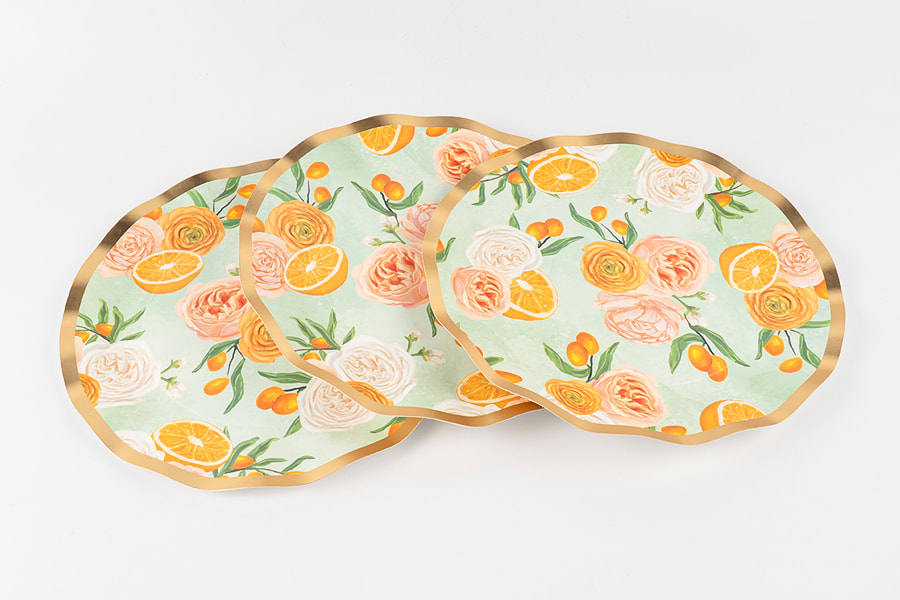
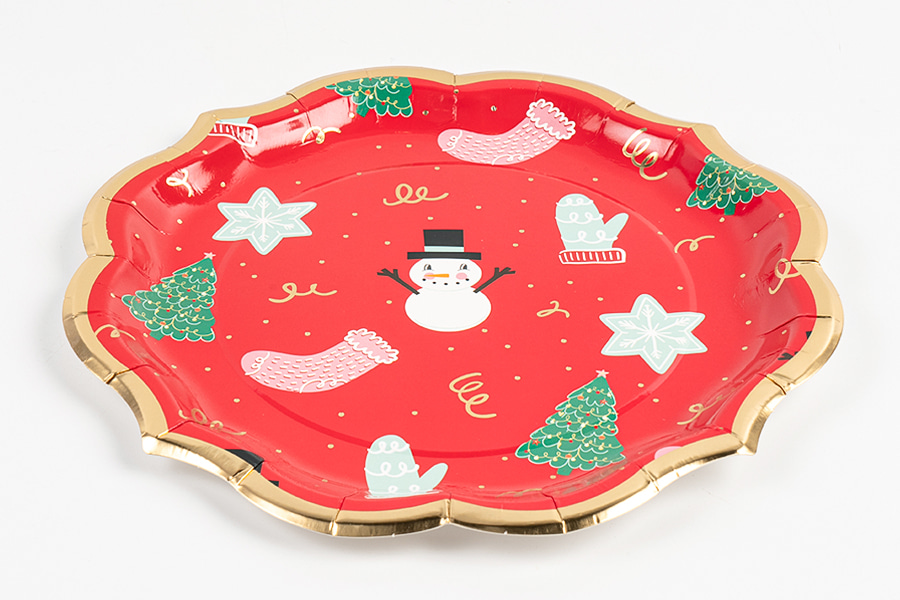
Events are brand experiences. Every touchpoint — including tableware — communicates something about the host's values and attention to detail. Custom printed paper plates allow event organizers, corporate hosts, and food brands to display logos, event themes, color palettes, and messaging directly on the tableware surface. This transforms a functional item into a branded marketing asset.
Modern CMYK offset and digital printing processes — the same technology used by specialist manufacturers equipped with Heidelberg printing machines — can reproduce high-resolution graphics, photographic imagery, and Pantone-matched colors on paper plates across small and large print runs alike. For trade shows, product launches, weddings, and corporate catering, custom printed paper plates create a cohesive, premium aesthetic that disposable plain-white plates cannot achieve.
From an operational standpoint, wholesale paper plates with custom branding ordered in sufficient volume typically achieve cost-per-unit levels comparable to unbranded alternatives — making the brand investment largely cost-neutral when procured at scale. Event organizers sourcing bulk paper plates for recurring events can amortize setup and plate costs across multiple orders.
Benefit 5 — Streamlined Post-Event Waste Management
One of the most underappreciated operational advantages of compostable paper plates is the simplification of post-event waste sorting. When all tableware is certified compostable, food-soiled plates can be collected in a single organic waste bin and sent directly to a composting facility — no need to rinse, separate, or recycle. This reduces labor time, lowers waste hauling costs, and eliminates the contamination problem that makes plastic recycling ineffective in post-event environments.
Large outdoor events serving thousands of guests generate significant volumes of mixed waste. A study by the University of Lund found that events adopting a fully compostable tableware program reduced post-event mixed waste volume by 35–50% compared to events using conventional disposables. For venues and event operators managing waste-disposal contracts, this reduction directly lowers operational costs and can contribute to LEED certification and green event credentials.
These stacked bar charts compare the post-event waste profile of conventional tableware versus a fully compostable paper plate setup. Switching from conventional disposables to biodegradable paper plates dramatically shifts the waste composition — moving approximately 40 percentage points from landfill-bound mixed waste into the organic/compostable stream. This shift significantly lowers waste disposal costs and supports venues in achieving zero-waste event certifications, which are increasingly required by corporate clients and large-scale event venues.
Benefit 6 — Guest Perception and Sustainability Signaling
Consumer attitudes toward sustainability have shifted from preference to expectation. A 2023 Nielsen IQ global survey found that 73% of consumers say they would change their consumption habits to reduce environmental impact, and 66% are willing to pay a premium for sustainable products. For event hosts, providing eco friendly paper plates and compostable tableware is a visible, tangible demonstration of these values — one that guests notice and remember.
Corporate event planners, in particular, are under growing pressure from ESG (Environmental, Social, and Governance) reporting requirements to document the sustainability profile of their events. Using certified disposable eco friendly plates and recording the volume of organic waste diverted from landfill contributes directly to scope 3 emissions reporting and sustainability disclosures. Several major corporate event frameworks now include tableware specifications as part of sustainable event procurement guidelines.
This horizontal bar chart draws from 2023 consumer sustainability research to illustrate the growing influence of eco-consciousness on event experiences. With over half of surveyed consumers actively preferring events that use eco-friendly tableware, switching to compostable or biodegradable paper plates is no longer just an environmental choice — it has measurable implications for guest satisfaction, brand perception, and repeat attendance. For corporate event planners, the 40% figure citing ESG program requirements reflects the growing institutionalization of sustainable procurement.
Benefit 7 — Scalable Supply Through Wholesale and Bulk Ordering
A practical advantage that often goes unmentioned is supply chain simplicity. Wholesale paper plates and bulk paper plates sourced from experienced manufacturers are available in consistent quality, uniform sizing, and verified food-contact compliance across large volumes. For recurring events, institutional catering programs, or multi-venue operations, establishing a direct supply relationship with a certified manufacturer eliminates the quality variability associated with retail procurement.
Key sizing considerations for event tableware include:
- 6–7 inch plates: Appetizers, desserts, cocktail-hour snacks — ideal for standing receptions
- 9 inch plates: Standard meal service — the most commonly specified size in catering
- 10–12 inch plates: Buffet service, large portions, or multi-item plating
- Compartmented plates: Cafeteria or school meal service where food separation is required
A complete disposable paper plate set paired with matching compostable cups, napkins, and cutlery creates a unified dinnerware tableware package that simplifies purchasing, presentation, and post-event waste collection. Sourcing the full set from a single manufacturer also ensures material consistency and regulatory compliance across all contact surfaces.
This line chart tracks the projected global market for eco-friendly disposable tableware from 2020 to 2028. The consistent upward trajectory reflects sustained demand growth driven by regulatory mandates, corporate sustainability programs, and rising consumer awareness across all major regions. The acceleration from 2023 onward aligns with the wave of single-use plastic bans taking effect globally, creating a structural demand shift toward compostable and biodegradable paper plates that is expected to persist well beyond 2028.
About Ningbo Fenghua Yongfa: OEM Eco-Friendly Paper Plate Manufacturer
Ningbo Fenghua Yongfa Printing & Stationery Co., Ltd. has been manufacturing paper products since 2003, operating from a 9,000 square meter facility in Ningbo, Zhejiang Province, China. The company specializes in paper printing, party items, and packaging — with paper cups, paper plates, napkin boxes, and complementary paper tableware as core product lines.
The factory is equipped with CMYK automatic Heidelberg printing machines, die-cutting machines, corrugated machines, and dedicated paper cup and paper plate forming machines. Over 70% of the 100+ staff have more than 10 years of manufacturing experience, supporting consistent quality across high-volume production runs.
As a professional OEM and ODM eco friendly paper plates manufacturer, Ningbo Fenghua Yongfa holds SGS, FDA, and EU standards certifications — confirming that its food grade paper plates and associated products meet the requirements for food contact safety across major global markets. The company has maintained Gold Supplier status on Alibaba since 2007, reflecting a sustained track record in international trade. Full customization services are available for custom printed paper plates, including custom sizes, colors, print designs, and packaging formats for OEM clients and wholesale buyers.
How to Choose the Right Eco-Friendly Paper Plates for Your Event
Not all paper plates marketed as "eco-friendly" carry the same credentials. When sourcing sustainable paper plates for an event, evaluate each option against these practical criteria:
| Selection Criterion | What to Check | Why It Matters |
|---|---|---|
| Certification | BPI, TÜV, EN 13432, FDA | Confirms compostability and food safety claims |
| Plate Weight (gsm) | 280 gsm minimum for meal service | Determines structural strength under load |
| Coating Type | Plant-based, PFAS-free barrier | Grease resistance without chemical contamination |
| Print Capability | CMYK offset or digital available | Enables custom branding for event identity |
| MOQ and Lead Time | Confirm for your event scale and timeline | Ensures supply reliability for large events |
Frequently Asked Questions About Eco-Friendly Paper Plates
Q1: What is the difference between compostable and biodegradable paper plates?
Compostable plates are certified to break down within a defined timeframe (typically 90–180 days) under specific composting conditions, leaving no harmful residue. Biodegradable means the material will eventually break down but has no certified timeline or conditions — it could take years. For events targeting zero-waste outcomes, certified compostable paper plates are the more reliable and verifiable choice.
Q2: Are eco-friendly paper plates suitable for hot food and liquids?
Most food grade paper plates designed for event use can handle hot food items without structural failure. However, they are generally not recommended for prolonged contact with hot liquids — that application is better served by paper cups or bowls. For hot entrees, soups, or stews, choose plates with a plant-based grease-resistant coating and a gsm rating of at least 300 for optimal performance.
Q3: Can I order custom printed paper plates in small quantities?
Custom printed paper plates typically require a minimum order quantity (MOQ) that varies by manufacturer and print specification. Digital printing processes generally allow lower MOQs than offset printing. For events with smaller guest counts, requesting samples first and discussing MOQ flexibility with the supplier is recommended. Many manufacturers serving the wholesale and bulk market offer tiered pricing that makes customization cost-effective at moderate volumes.
Q4: How do I confirm that eco-friendly paper plates are food safe?
Look for plates certified to FDA (USA), EU food contact material regulations (EC 1935/2004), or SGS-tested standards. These certifications confirm that no harmful substances migrate from the plate into food under normal service conditions. Always request the relevant test reports or certificates from the manufacturer before placing a large order, particularly for events serving sensitive populations such as children or healthcare patients.
Q5: What sizes of paper plates are best for large-scale catered events?
For seated meal service, 9-inch plates are the industry standard and are compatible with most buffet and plated service formats. For cocktail receptions or appetizer stations, 6–7 inch plates are preferred. Events featuring large buffet portions or multi-component plating typically use 10–12 inch plates. Ordering a combination of sizes from the same supplier ensures visual consistency and simplifies logistics for the event team.
Q6: Do bulk paper plates from overseas manufacturers meet US and EU safety standards?
They can — provided the manufacturer holds the relevant certifications and produces to the applicable standards. Reputable manufacturers supplying wholesale paper plates to international markets will hold FDA (for US imports), EU food contact material compliance, and independent third-party testing reports from bodies such as SGS or Bureau Veritas. Always verify certification validity and request the most recent test reports before placing a large bulk order.