English
 中文简体
中文简体Eco Friendly Party Plates: How to Choose Materials, Certifications & Suppliers
Content
A single children's birthday party for 20 guests leaves behind 60 to 80 used plates, cups, and napkins in one afternoon. Scale that up to a wedding, a school fair, or a restaurant's weekend service, and tableware stops being a small detail. So here is the conclusion first: plates made from renewable paper board, produced under verified food-contact standards and finished with a coating that matches your disposal route, deliver the best balance of cost, sturdiness, and environmental footprint for most parties. Conventional plastic and foam plates lose on every measure except unit price.
The guidance below comes from our production floor. We have printed and formed paper tableware since 2003 for importers, catering groups, and party brands, so this guide covers what genuinely makes eco friendly party plates, how the main materials compare, which certifications deserve attention, and what bulk buyers should confirm before signing a purchase order.
What Actually Makes a Party Plate Eco-Friendly
Green claims are easy to print and hard to verify. A plate's real credentials come from four factors, and the weakest one sets the limit.
- Fiber source: board from responsibly managed forests or recovered fiber. Ask for chain-of-custody documentation such as FSC rather than accepting the word natural on a spec sheet.
- Coating: grease resistance usually requires a liner, and a conventional PE laminate blocks both recycling and composting. Water-based and dispersible coatings keep the fiber recoverable at end of life.
- Production: efficient offset printing, die-cutting, and forming lines cut waste per unit, while water-based inks avoid solvent residues on food-contact surfaces.
- End of life: a plate is only as compostable as its weakest layer, which is almost always the coating. Match the product to the disposal system your guests or customers actually have.
The practical takeaway: an ordinary paper plate with a compostable-friendly coating outperforms a premium fiber plate laminated with plastic film. That is exactly why our recent development work focused on the coating layer rather than the board itself, as described in the launch of our compostable paper tableware line.
How the Main Materials Compare
No single material wins every scenario. The five options buyers weigh most often break down as follows:
| Material | Renewable source | Typical coating | End of life | Best suited for |
|---|---|---|---|---|
| Paper board | Yes, managed forests | Water-based or compostable liner; PE variants exist | Recyclable or compostable if coating allows | Everyday parties, kids' events, catering |
| Bagasse | Yes, sugarcane byproduct | Usually none | Home compostable in most cases | Hot, saucy, greasy dishes |
| Palm leaf | Yes, fallen leaves | None | Home compostable | Premium events, barbecues |
| Bamboo | Yes, fast-growing grass | None or light lacquer | Generally compostable | Upscale weddings, tastings |
| Conventional plastic | No, fossil-based | Not applicable | Neither practically recycled nor compostable | Avoid where alternatives exist |
Paper board dominates commercial party ranges because it prints beautifully in full CMYK, accepts embossing and hot stamping, and stays cost-effective at volume. Bagasse and palm leaf handle greasy mains exceptionally well but typically cost two to four times more per unit, which is why they appear mostly at premium-priced events.
Certifications and Standards Worth Checking
If you resell tableware or serve food on it, certifications are the difference between a defensible product claim and a customer complaint. Ask suppliers for documents, not slogans:
- FDA food-contact compliance for the United States market, covering the board and any coating or ink that touches food.
- EU Framework Regulation (EC) No 1935/2004, the baseline requirement for materials intended to contact food in Europe.
- SGS or equivalent third-party reports for thickness, stiffness, and seal integrity, parameters that predict real-world performance better than any product photo.
- EN 13432 or ASTM D6400 if you intend to market plates as compostable, since these standards define disintegration time and ecotoxicity limits.
- FSC or comparable fiber certification when the sourcing story matters to your brand.
Our production is audited against SGS, FDA, and EU food-contact requirements, and every batch is inspected for thickness, stiffness, and seal integrity before shipment. We treat these checks as procurement hygiene rather than marketing.
Matching Plate Shapes and Finishes to the Occasion
Eco-friendly does not have to mean plain. Shape and surface finishing are where sustainability meets table styling, and the same certified board supports very different looks.
Round and square: the everyday base
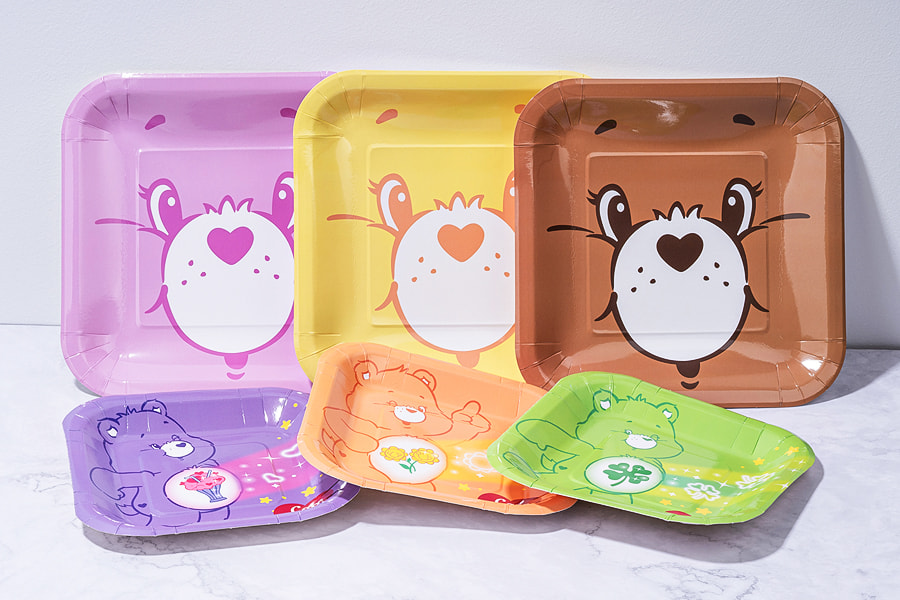
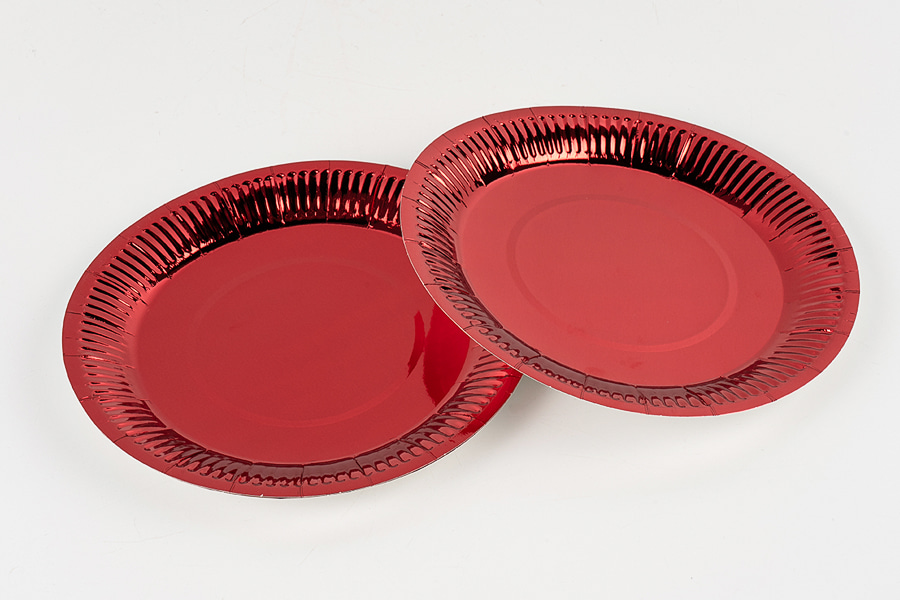
Round plates remain the universal workhorse, stackable and budget-friendly from buffet lines to backyard grills. Square plates read as modern and photograph well, with solid tones keeping the table calm and cartoon prints anchoring children's themes.
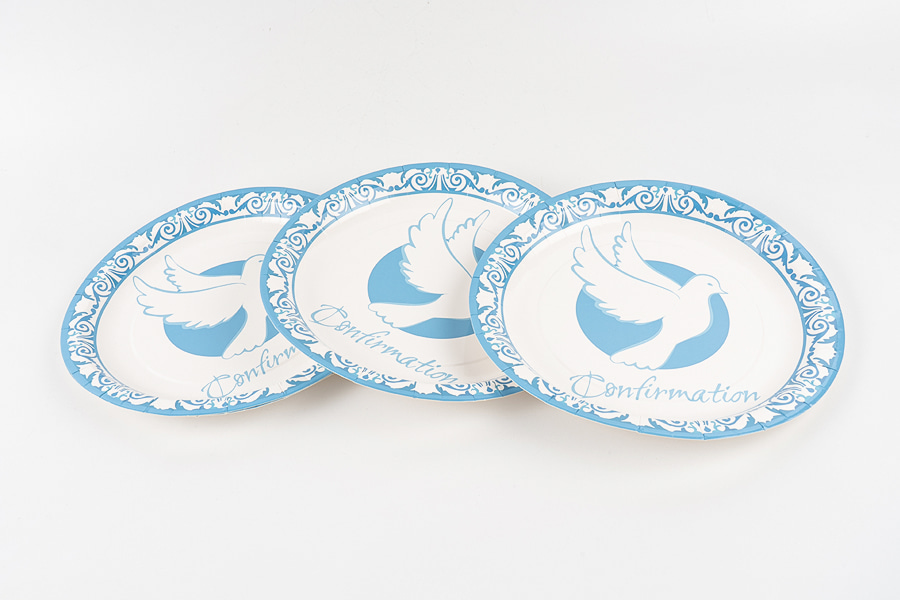 Standard Round Paper Plates for Everyday and Event DiningMade from biodegradable sugarcane pulp, bamboo fiber, or kraft paper, these round plates come in 130–180mm sizes with a wavy rim for stability. They suit buffets, barbecues, and family meals where stackable, budget-friendly tableware matters most.View Product →
 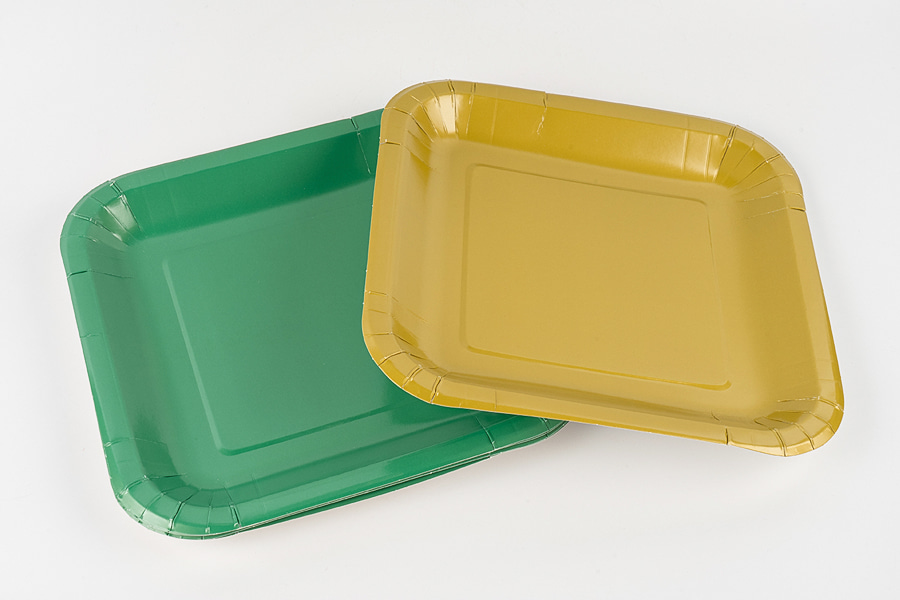 Solid Color Square Paper Plates in Modern TonesAvailable in white, beige, gray, and pink with 180–210g/m² pulp and an oil-resistant coating, these square plates hold hot dishes and sauces without leaking. Their clean geometry keeps tables calm and photographs well at parties and catered events.View Product →
Shaped plates: decoration built into the board
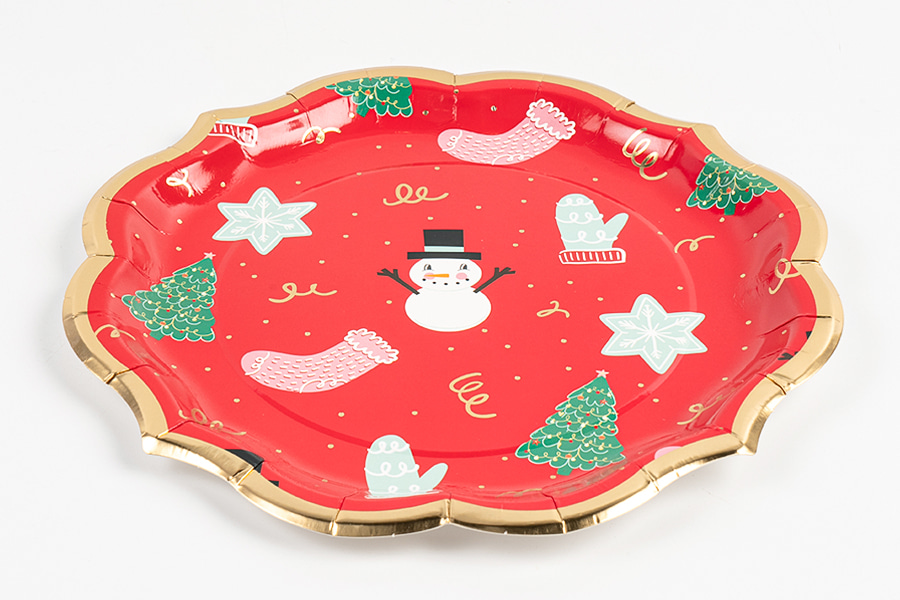
Die-cut outlines such as flower and wave shapes, or fully custom silhouettes, turn the plate itself into part of the decor. They suit garden parties, bridal showers, and holiday tables where a plain round would look flat.
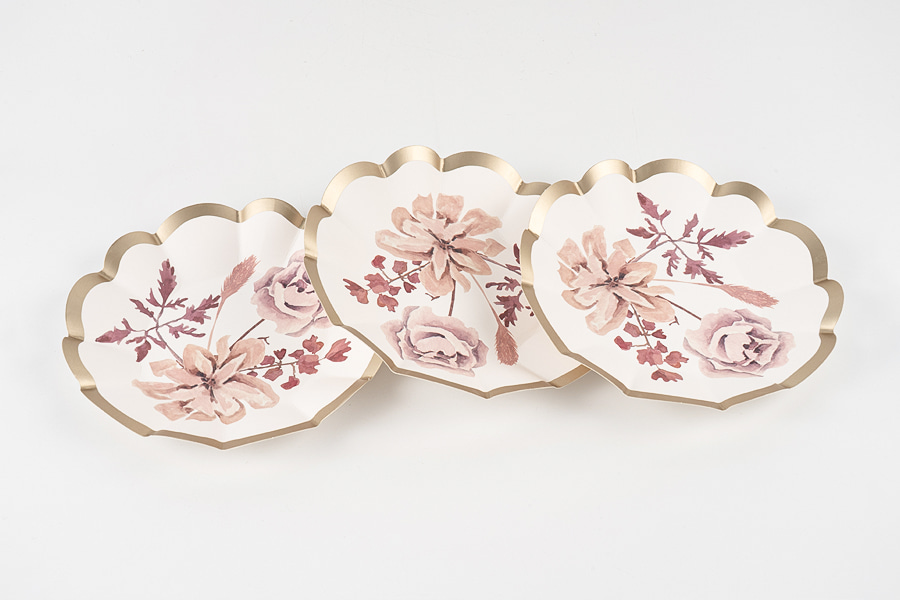 Flower-Shaped Paper Plates for Themed CelebrationsPrinted with realistic petal textures on high-grammage virgin pulp, these flower-shaped plates resist water and oil while adding decorative charm. With sizes from 18 to 26cm, they fit garden parties, bridal showers, and holiday tables where plain rounds look flat.View Product →
Finishes that add celebration without plastic
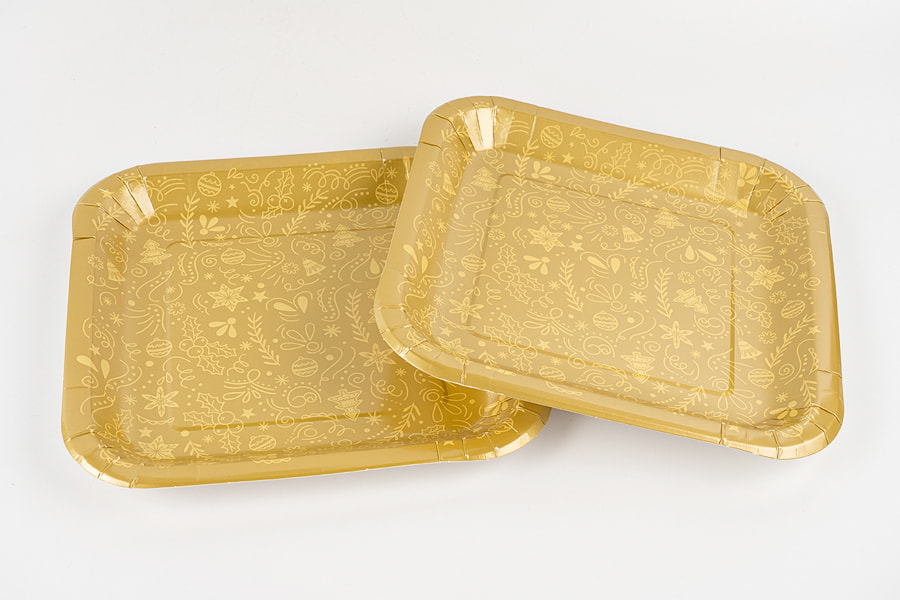
Hot stamping and embossing add celebration weight to weddings and milestone events while keeping the substrate fully paper-based, so the table looks dressed up without adding a plastic layer to the waste stream.
After the Party: Disposal Done Right
The greenest plate can still end up in landfill if the disposal route is wrong. Three rules keep the end of life as clean as the purchase:
- Scrape food residue first. Lightly soiled, uncoated paper plates can enter paper recycling in many municipal systems; heavily soiled plates belong in organic waste where facilities accept them.
- Never mix PE-lined plates into a paper recycling stream, because the plastic film contaminates the pulp and can downgrade an entire batch.
- If compostability is the goal, confirm whether your city offers industrial composting. Certified plates decompose fastest there; home composting works for uncoated fiber but takes months, not days.
Practical tip for event planners: print a short instruction, such as compostable, please use the green bin, on napkins or table signage. Clear sorting guidance changes outcomes more than premium materials alone.
Key Takeaways
- Choose renewable board with a coating that matches your disposal system, since the coating, not the board, decides end-of-life outcomes.
- Verify rather than trust: request FDA, EU, and SGS documentation covering the exact product and batch.
- Match shape and finish to the occasion: solid rounds for volume catering, squares for modern styling, die-cut shapes and gold stamping for celebrations.
- Make disposal easy for guests, because signage and bins change results more than material upgrades.
If you are building a party or catering range around certified, printable paper tableware, our sustainability program documents how we source, test, and manufacture, and our team is glad to discuss specifications, samples, and custom printing for your market.