English
 中文简体
Are Paper Plates Recyclable? What Buyers and Restaurant Owners Should Know
Content
Shut down a busy kitchen after the dinner rush and you will face the same decision every night: which bin do the used paper plates go into? For restaurant managers, caterers, and party hosts, that choice has a bigger environmental impact than most people realise. The straightforward answer to “are paper plates recyclable” is this: clean, uncoated paper plates can be recycled, but the majority of used plates cannot, because food residue, grease, and plastic coatings contaminate the paper fibres. This guide explains how recycling facilities treat paper plates, how to test a plate in seconds, and what procurement teams should ask suppliers before placing a large order.
Why Most Paper Plates Cannot Be Recycled
Recycling paper is a wet process: mills mix paper with water, break the fibres apart, and press them into new sheets. Contaminants wreck that process. Three common features of disposable paper plates put them straight into the reject pile.
Food and grease cause the most frequent failure. When oil-soaked paper enters a recycling mill, the grease coats the fibres and stops them from bonding into new paper. A single heavily soiled plate can contaminate an entire batch, so most municipal recycling programmes simply tell residents to leave paper plates out of the paper bin.
Coatings are the second barrier. Plates used for hot or moist meals are almost always laminated with a thin polyethylene film to keep them rigid. That plastic film is nearly impossible to separate from the paper in standard sorting equipment. Wax-coated plates behave in the same way and are equally unsuitable for recycling.
Decorative finishes add a third problem. Heavy pigments, metallic hot stamping, and gloss varnishes lower the quality of the recovered pulp. In practice, the most attractive “party plate” is often the least recyclable one.
| Plate type | Recyclable? | Compostable? | Recommended disposal |
|---|---|---|---|
| Plain uncoated paper, clean | Yes | Yes (home or industrial) | Paper recycling bin |
| Polyethylene-coated (glossy inner layer) | No | No | General waste |
| Wax-coated | No | No | General waste |
| Heavily printed or foil-stamped | Rarely | Only with certified compostable inks | General waste |
| Certified compostable plate | No (do not put in paper bin) | Yes (industrial facility) | Commercial composting |
How to Tell Whether a Paper Plate Is Recyclable
Before you toss a plate into the recycling bin, run three quick checks. They take less than a minute and will tell you more than most packaging claims.
- Tear test: tear the plate near the rim. If a thin plastic film peels away from the paper, the plate is coated and should never go into the paper bin.
- Surface scan: a shiny, waxy surface indicates a moisture barrier. Uncoated paper has a slightly rough, absorbent feel and loses its stiffness once wet.
- Soil check: any grease stain, sauce mark, or food residue sends the plate to landfill, regardless of the base material.
Then check local rules. Many recycling plants automatically reject paper plates because optical sorters cannot distinguish a coated plate from a clean one. Even a perfectly clean, uncoated plate will end up in landfill if your local materials recovery facility (MRF) does not accept it. Before a big event, call the waste collection service and ask one direct question: does the local MRF accept uncoated paper plates?
What Buyers Should Ask Before Ordering Paper Plates in Bulk
For restaurants, caterers, and distributors, the recycling question is really a purchasing question. The plate’s performance (stiffness, grease resistance, appearance) and its end-of-life fate are both decided at the manufacturing stage, not at the bin.
A polyethylene-laminated plate survives a heavy meal but fails every recycling test. An uncoated plate composts or recycles easily but turns soggy against gravies, sauces, and fried food. There is no universal “best” plate, only the right balance for your specific menu. The decisive factor is the barrier material, so treat it as a specification, not a marketing detail.
When you evaluate a supplier, add these items to your procurement checklist:
- Coating type: plastic lamination or water-based barrier? Request the exact material specification in writing.
- Ink category: are the printed designs made with food-contact, water-based inks?
- Certifications: does the factory hold FDA, EU food-contact, SGS, or comparable documentation?
- End-of-life claim: does the supplier state, in technical terms, what happens to the product after use?
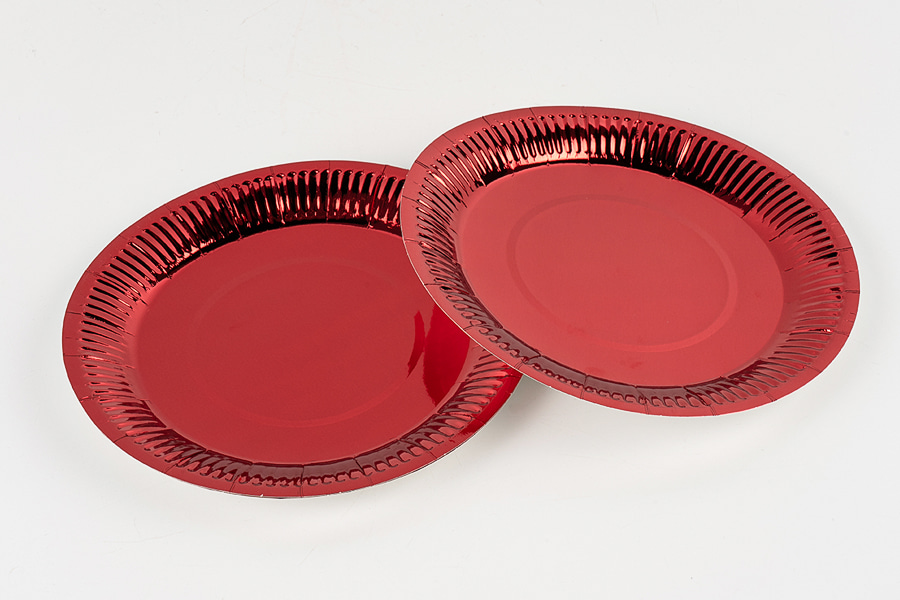
A standard round paper plate may look identical to a coated one, but the raw material specification changes everything downstream.
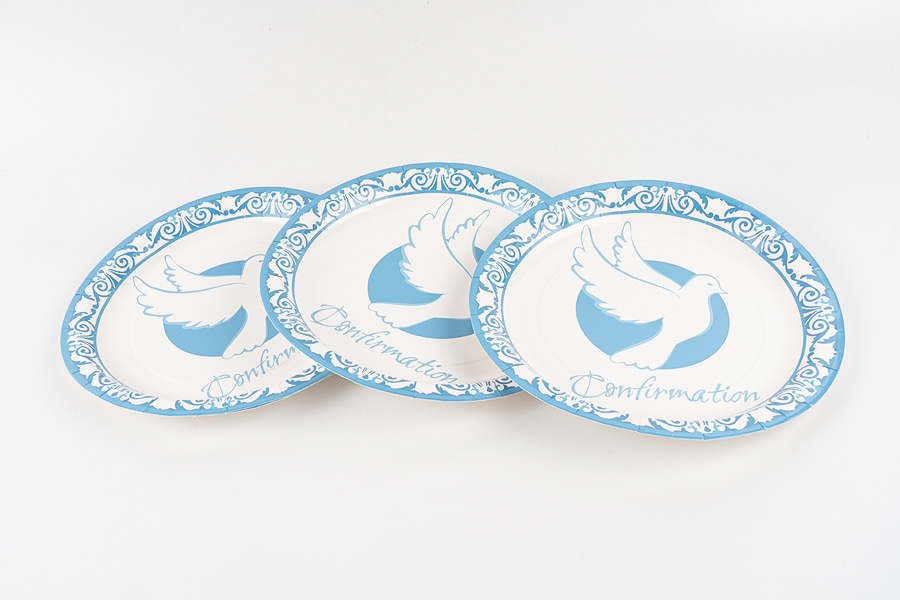 Standard Round Paper PlatesStandard Round Paper Plates are a classic category of disposable tableware, made from food-grade environmentally friendly materials. They are biodegradable and can mee...View Product →
A supplier that cannot answer these four points will probably not be able to help you meet your waste-reduction targets either.
Party Plates and Decorative Sets: The Waste Problem Is Bigger Than the Plate
Celebration tableware adds another layer. Gold-stamped plates and brightly printed patterns are the norm at parties, and those finishes are among the hardest for recyclers to handle. Compounding the issue, a party rarely uses plates alone. Cups, napkins, and cutlery are set out together, creating a mixed waste stream that sorting facilities have to process piece by piece.
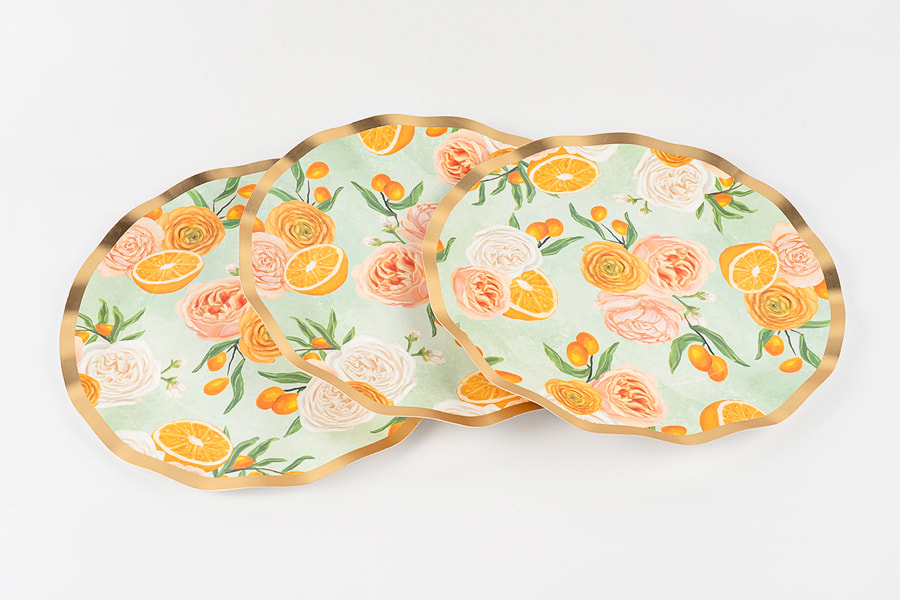
If you are buying decorative designs such as flower-shaped plates or wave-edged plates, ask whether the print uses water-based inks and whether any foil or glitter is applied. Metallic finishes are beautiful on the table but poison for recycled pulp, so weigh the visual impact against the disposal reality.
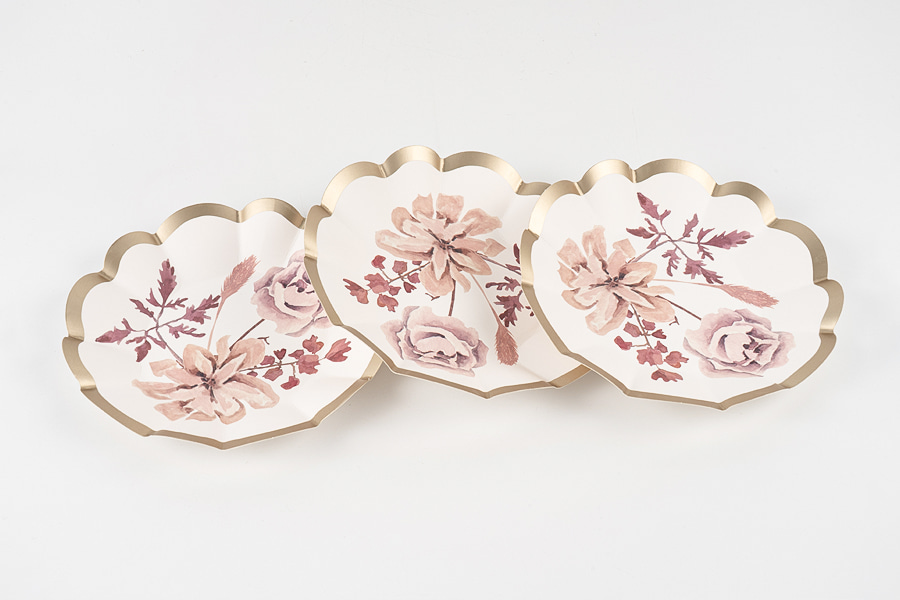 Flower-shaped Paper PlatesFlower-shaped Paper Plates are creative disposable tableware inspired by flowers, breaking away from the monotonous layout of traditional round and square paper plates...View Product →
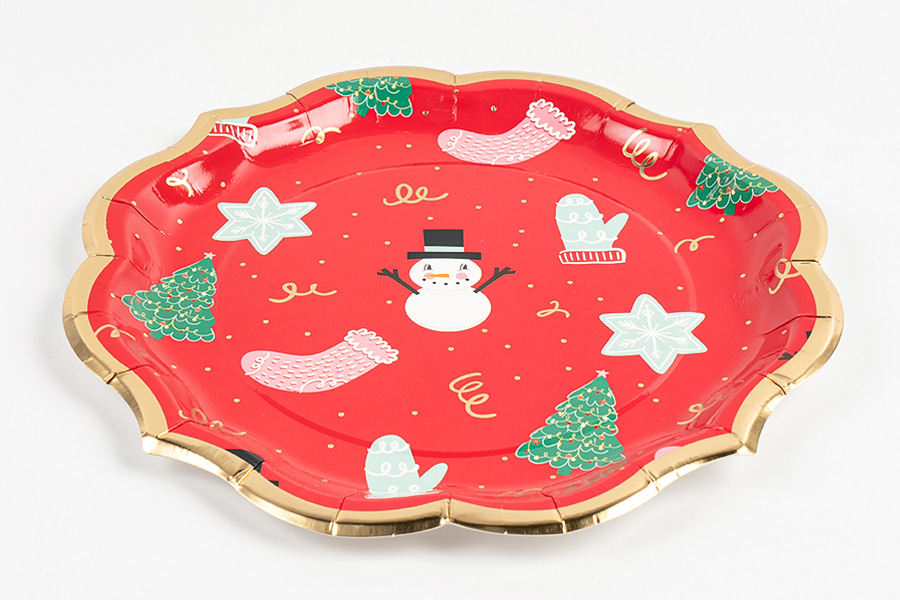
Holiday catering sets are a particular challenge because they combine plates, cups, and napkins in one coordinated theme. The convenience is real, but so is the sorting problem. The most practical approach is to plan the waste station at the same time as the menu: clearly label bins for clean paper, food waste, and general rubbish, and place them before the guests arrive.
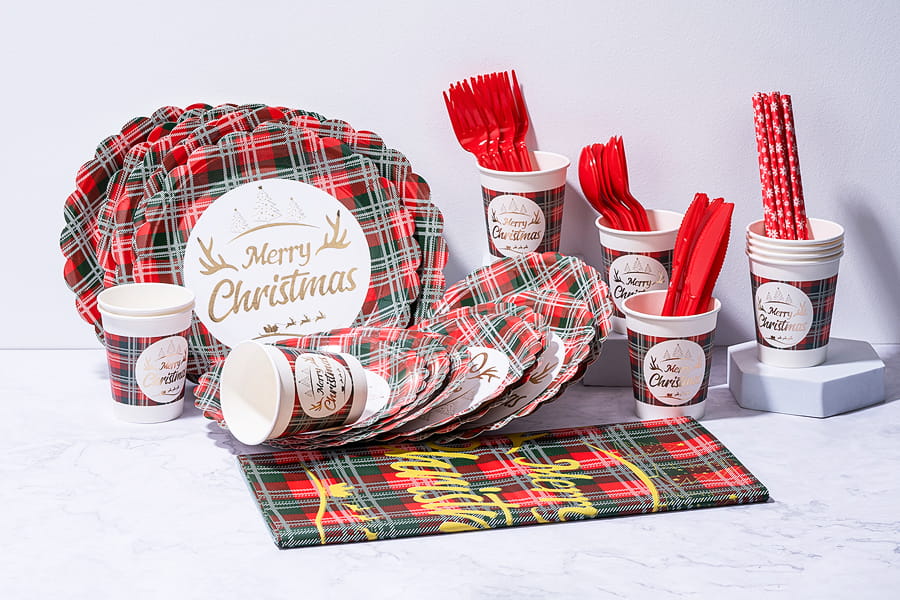 Christmas Catering Paper SetsChristmas Catering Paper Sets are designed for Christmas parties, outdoor picnics, and various festive occasions. The set includes food-grade paper cups, paper plates,...View Product →
Responsible Disposal and Lower-Impact Alternatives
When paper plates cannot be recycled, composting is the next-best outcome. Certified compostable plates break down in industrial composting facilities within weeks, provided the local composter accepts them. Look for certifications such as BPI in North America, EN 13432 in Europe, or Japan’s GreenPla equivalent, and confirm with the facility before assuming anything.
For dine-in settings, the most reliable solution is still a washable plate. For takeaways and events where disposables are unavoidable, choose the least coated product that can still do the job, and make sure guests can easily separate clean paper cups and plates from greasy leftovers.
Suppliers are adapting. At our factory in Ningbo, we have shifted part of the production toward compostable materials and water-based inks, and we publish the technical details in our sustainability strategy. We also shared what we learned from a pilot run of compostable paper tableware in a recent company announcement. The consistent lesson from these projects: recyclability is a design decision, not an accident. It has to be planned at the drawing board, printed into the specifications, and verified at the factory before the plates ever reach your loading dock.
So, are paper plates recyclable? Only the clean and uncoated minority, and only if your local facility accepts them. For everything else, keep them out of the paper bin, compost them when they carry a compostable certification, and before your next order, ask your supplier one simple question: what does this product become after the meal? The manufacturer that answers with material specifications and certificates, rather than vague green claims, is the one worth keeping.